
Alfa-Prometrin
Zhejiang Zhongshan Chemical Industry Group Co., Ltd.
Herbicides
1
1
20 offers
4.92 €per pack
Buy

Melilotus
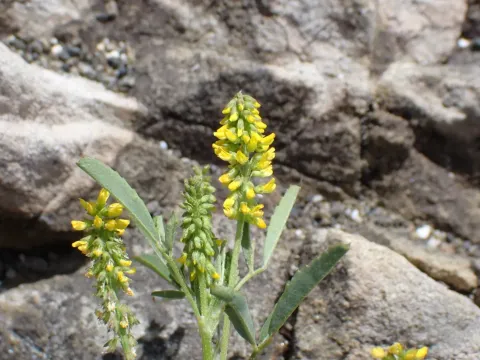
Sweetclover is a highly adaptable legume that thrives when proper sowing techniques are applied, particularly concerning the timing of establishment. Sowing is typically carried out in early spring as soon as soil conditions permit, allowing the plants to utilize winter moisture for strong root development.
 Hairy sweet clover
Melilotus hirsutus Lipsky
Hairy sweet clover
Melilotus hirsutus Lipsky
 Indian sweetclover
Melilotus indicus (L.) All.
Indian sweetclover
Melilotus indicus (L.) All.
 Melilotus suaveolens
 Ledeb.
Melilotus suaveolens
Melilotus suaveolens Ledeb.
 Melilotus sulcatus
 Desf.
Melilotus sulcatus
Melilotus sulcatus Desf.
 Sicilian melilot
Melilotus siculus (Turra) B. D. Jacks.
Sicilian melilot
Melilotus siculus (Turra) B. D. Jacks.
 White sweetclover
Melilotus albus Medik.
White sweetclover
Melilotus albus Medik.
 Yellow sweet clover
Melilotus officinalis Lam.
Yellow sweet clover
Melilotus officinalis Lam.


In regions with arid climates, late autumn or winter sowing is often preferred, ensuring that seeds germinate quickly when temperatures rise. Due to the hard seed coat characteristic of many Melilotus species, scarification is a mandatory pre-sowing step to achieve acceptable field emergence.
The seeding rate varies based on the method: 15–20 kg/ha for solid drilling is standard, though this can be reduced if wider spacing is used for seed production. Seed depth should be maintained at 1–3 centimeters to ensure uniform contact with the soil while allowing sufficient space for emergence.
Using high-quality, weed-free seed is crucial, as sweetclover seedlings grow slowly during the first few weeks, leaving them vulnerable to competition from aggressive weeds. Careful site selection and pre-seeding herbicide applications can significantly improve the success rate of the stand.
When used as a green manure or cover crop, sweetclover can be sown after early-harvested grain crops. This strategy allows for biological soil improvement within the crop rotation cycle, adding organic matter and nitrogen for the subsequent planting season.
Sweetclover (Melilotus) is renowned for its exceptional tolerance to adverse soil conditions, making it a valuable crop for rehabilitating degraded or saline lands. It belongs to the Fabaceae family and thrives where other more sensitive crops might fail due to low fertility or stony soil.
The plant possesses a robust taproot system that provides high drought resistance, enabling it to access moisture from deeper soil profiles. This biological feature makes sweetclover an ideal component for sustainable agricultural systems in semi-arid and steppe environments.
Light availability is a critical requirement for sweetclover, as it does not perform well in shaded areas. Additionally, the crop is highly sensitive to waterlogging and poor drainage; therefore, fields with high water tables or heavy, poorly drained clay soils should be avoided to prevent root damage.
Sweetclover adapts well to various soil pH levels, although it reaches its peak productivity on neutral to slightly alkaline soils. Through its symbiotic relationship with rhizobia bacteria, it effectively fixes atmospheric nitrogen, enhancing the nutrient profile of the soil for future crops.
Winter hardiness is one of the most valued traits of biennial sweetclover varieties, allowing them to withstand harsh winter conditions without survival issues. This resilience makes the crop a reliable and consistent option for forage production and soil improvement in diverse climatic zones.
The biomass yield of sweetclover varies based on management practices, reaching between 20 and 40 tons of green matter per hectare under optimal conditions. Strategic application of phosphorus and potassium fertilizers can further enhance these yields, especially on nutrient-depleted soil types.
Maximum nutritional value is achieved during the early flowering phase; delayed harvesting causes stems to lignify, which drastically reduces the quality and palatability of the forage. Proper timing is essential to balance biomass quantity with the overall nutritional quality required for livestock.
When grown for seed, yields typically range from 0.5 to 1.5 tons per hectare. Due to the uneven ripening of seeds, managing harvest to minimize shattering is vital. Modern combine settings and proper harvest timing are the primary factors in capturing the maximum possible seed yield.
The use of advanced harvesting technology, including headers designed for small seeds, helps reduce losses. A split harvesting method, involving cutting and windrowing before threshing, allows seeds to reach uniform maturity and reduces moisture content to safe storage levels.
In its role as a green manure, yield is measured by the amount of nitrogen and organic matter incorporated into the soil. Sweetclover effectively improves soil structure and fertility, providing long-term benefits that translate into yield increases for following crops in the rotation.
Young sweetclover seedlings are highly susceptible to weevil damage, which can lead to significant stand loss. Seed treatment with systemic insecticides is the standard practice for protecting vulnerable plants during the critical early growth stages against these specific pests.
Powdery mildew represents the most significant fungal threat, especially in humid climates or where planting density is too high. Managing plant spacing and ensuring good airflow across the field are essential cultural practices to minimize the spread of fungal pathogens.
Leaf spot diseases can also occur, particularly in seasons with excessive rainfall, potentially reducing photosynthetic efficiency. Maintaining a proper crop rotation and avoiding the continuous planting of legumes on the same field helps to disrupt the life cycles of these pathogens.
Nematodes can become a problem if sweetclover is planted too frequently in the same rotation, highlighting the importance of diversifying crop types. Rotating with cereal crops is an effective biological way to naturally suppress nematode populations and restore soil health.
Aphids may occasionally infest the upper parts of the plant, but they are often kept in check by natural predator populations. Insecticide use is typically a last resort and should only be applied if the economic threshold of damage is reached to preserve the beneficial insect ecosystem.
Harvesting sweetclover for hay should be completed at the late bud to early flowering stage to ensure the highest protein content. Using a conditioner or crimper during mowing helps crush the thick stems, allowing for faster and more uniform drying of the forage.
Proper haymaking involves careful handling to prevent the loss of leaves, which are the most nutrient-dense part of the plant. High-quality hay should maintain its green color and aroma, indicating good preservation of vitamins and the absence of mold or fermentation issues.
Seed harvest requires careful monitoring of pod color, waiting for a majority to turn brown to ensure physiological maturity. Utilizing windrowing allows the seeds to finish ripening in the field, which minimizes the risk of shattering compared to direct combining of the standing crop.
For biennial crops, the harvest plan usually spans two years, with green matter harvested at the end of the first year and a full harvest cycle in the second. This approach optimizes the utility of the crop and ensures consistent supply for livestock operations.
For green manure purposes, the crop should be incorporated into the soil just before full flowering begins. This ensures maximum nitrogen content while ensuring the plant material is still soft enough for rapid decomposition by soil microorganisms, improving soil fertility for the next crop.