
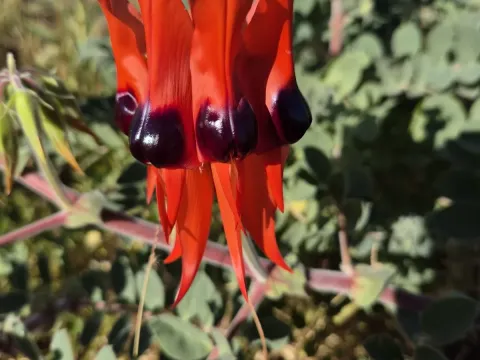
Swainsona
Swainsona Salisb.
Swainsona is a genus of flowering plants in the family Fabaceae, primarily native to Australia. These plants range from small herbs to shrubs and are well-adapted to the challenging environmental conditions of the Australian outback.
What the section contains

Swainsona
Botanically, they are characterized by pinnate leaves and pea-like flowers, often arranged in racemes. They possess deep taproots, which are essential for accessing moisture in arid regions where rainfall is erratic and unreliable.
Regarding soil requirements, Swainsona thrives in well-drained, sandy, or loamy soils. Good aeration is vital for the survival of the plant, as stagnant water is the primary cause of plant death due to rapid root rot development.
The climate requirements include high light intensity and an ability to withstand long periods of drought. These plants have evolved mechanisms to limit transpiration, allowing them to remain active even under significant heat stress.
From an agricultural standpoint, the potential for nitrogen fixation makes them a valuable asset in soil health management. By fostering symbiosis with specific rhizobia, they improve fertility in nutrient-poor, arid soils.
Root rot caused by fungal pathogens is the most significant threat to Swainsona plantations. This is usually triggered by inadequate soil drainage or excessive irrigation practices that saturate the root zone.
Pests, particularly caterpillars and aphids, can cause substantial damage to the foliage and developing inflorescences. Controlling these populations at an early stage is crucial to ensure optimal growth and development.
Weed competition is a major challenge during the early seedling stage. Due to the slow initial growth rate, the crop is highly susceptible to being outcompeted for nutrients and sunlight by faster-growing opportunistic plants.
Soil-borne nematodes can cause long-term productivity issues if fields are not properly managed through crop rotation. Minimizing the soil disturbance and keeping the rhizosphere healthy is a priority.
To maintain plant health, integrated pest management strategies are recommended. This includes regular field scouting to identify disease outbreaks early and adjusting water supply to prevent environmental stress-related infections.