
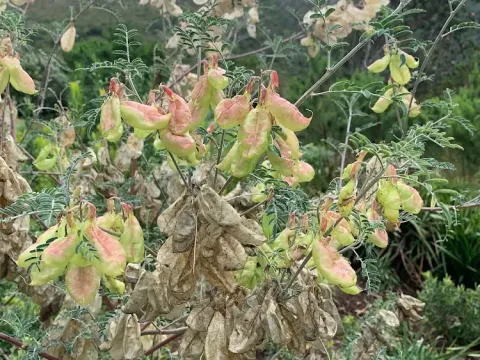
Sutherlandia
Sutherlandia
Sutherlandia (Sutherlandia frutescens) is typically propagated via seeds, which are best sown in a greenhouse or nursery setting to ensure high germination rates.
What the section contains

Sutherlandia
The ideal time to sow seeds is early spring, providing the seedlings with a long growing season to establish strong root systems before being hardened off.
Because the seeds have a tough outer coat, it is highly recommended to perform scarification or soak them in warm water for 24 hours to accelerate the emergence of sprouts.
Use a well-draining, sandy-based potting mix for initial sowing, as this replicates the natural growth environment of the plant and prevents early damping-off diseases.
Transplanting to the permanent location should only occur once the threat of frost has completely passed, as young plants are susceptible to cold damage.
Belonging to the Fabaceae family, Sutherlandia is native to the arid regions of Southern Africa, meaning it is exceptionally well-adapted to high heat and intense sunlight.
The plant demands a full-sun location with excellent soil drainage, as it is highly sensitive to waterlogged conditions that can quickly rot its root system.
Soil pH should be neutral to slightly alkaline, and the soil structure should be loose and rocky or sandy to prevent moisture retention at the roots.
Irrigation must be kept minimal; the plant is drought-tolerant and thrives when allowed to dry out significantly between watering sessions during the growing season.
Temperature management is key, with an optimal growth range between 20°C and 30°C, and the plant requires good airflow to prevent humidity-related issues.
Root rot is the most common threat to Sutherlandia, usually resulting from over-irrigation or planting in heavy, poorly drained clay soils that retain excessive moisture.
Spider mites can become a major concern, particularly in greenhouse cultivation where low humidity and stagnant air provide favorable conditions for their rapid reproduction.
Powdery mildew may manifest as a white dusting on leaves if ventilation is poor, which necessitates adjusting the planting density and ensuring air circulation.
Aphid infestations are frequently observed on young, succulent shoot tips, which can stunt growth and introduce secondary viral infections to the crop.
Regular scouting and early intervention through cultural practices, such as pruning infected areas, are the most effective strategies for maintaining a healthy plantation.
Harvesting for medicinal purposes focuses on the aerial parts of the plant, including leaves and stems, which are rich in specialized secondary metabolites.
The best time for harvesting is during the peak flowering stage, as this timing ensures the highest concentration of phytochemicals within the plant tissue.
Plants should be pruned using sterilized, sharp shears to minimize physical stress and prevent the entry of pathogens into the cut stem sections.
Post-harvest processing involves rapid drying in a shaded, well-ventilated area to maintain the structural integrity and potency of the active ingredients.
Final storage should be in airtight, light-proof containers kept in a cool, dry environment to ensure the longevity of the herb and prevent oxidation.