
Melilotus sulcatus
Melilotus sulcatus Desf.
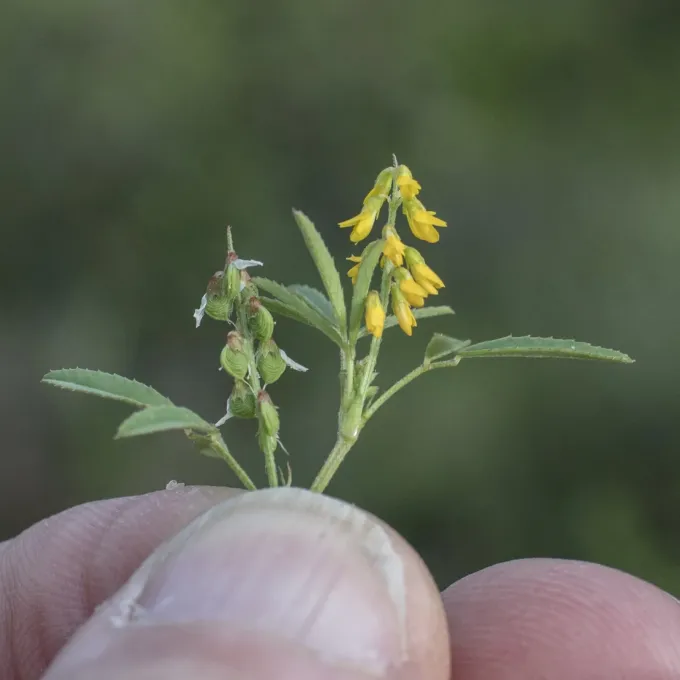
Description
Sowing dates
Melilotus sulcatus, commonly known as round-podded sweet clover, is an annual legume species adapted to warm climates. Sowing should take place in early spring once soil temperatures reach a minimum of 5 to 8 degrees Celsius, allowing the plants to establish before the onset of summer heat.
The optimal seeding depth is shallow, typically ranging between 1 and 2 centimeters. Because the seeds are small, it is essential to prepare a firm, fine seedbed to ensure maximum contact between the soil and the seed for uniform germination.
The standard seeding rate for a pure stand is generally between 12 and 15 kilograms per hectare. In some regions, scarification of the seeds is highly recommended to break seed dormancy and increase the speed and percentage of germination in the field.
Row spacing should be maintained at 15 to 30 centimeters. Narrower rows are preferable for forage production to provide better ground cover and suppress weeds, while slightly wider rows may be used if the main objective is seed production or soil conditioning.
After seeding, rolling the field is a standard agronomic practice to press the seeds into the soil and improve moisture retention. This step is critical in arid environments where early-season moisture is limited and often variable.
Growing requirements
This species is well-adapted to a variety of soil types, including calcareous and slightly saline soils where other crops might struggle. Its natural distribution across the Mediterranean basin reflects its preference for warm, semi-arid environments with distinct wet seasons.
Melilotus sulcatus requires full sun to thrive. It does not perform well in shaded conditions, which can lead to stunted growth and reduced nitrogen-fixing capacity. High light exposure is crucial for maximizing the biomass yield of the plants during their active growth phase.
While tolerant of low-fertility soils, the plant benefits from neutral to alkaline pH levels. It is highly valued for its ability to improve soil structure by penetrating deeper soil layers with its taproot, which helps to alleviate soil compaction in agricultural fields.
The plant is known for its impressive drought tolerance, allowing it to survive periods of limited rainfall. However, it is sensitive to waterlogging; poorly drained or excessively wet soils often lead to root suffocation and increased susceptibility to soil-borne diseases.
As a legume, it forms a symbiotic relationship with nitrogen-fixing bacteria, significantly enhancing soil nitrogen content. This makes it an excellent choice for green manure programs or as a component in crop rotation systems aiming to reduce dependency on chemical fertilizers.
Main diseases and pests
Pest pressure is primarily driven by beetles such as the clover leaf weevil, which can cause significant defoliation if left unmanaged. Regular monitoring is necessary to determine if economic thresholds have been reached before considering any chemical intervention.
Fungal diseases, including powdery mildew and various leaf spot pathogens, are the most common health issues for this crop. These diseases are usually most prevalent during cool, humid conditions when air circulation within the canopy is restricted.
Root rot is a major threat in fields where sweet clover has been grown repeatedly. Rotating this crop with non-leguminous plants such as cereals is essential to break the life cycle of soil-borne pathogens and maintain a healthy field environment over the long term.
Aphid infestations can also occur, particularly during hot and dry spells. While plants often recover, severe outbreaks can stress the crop and potentially facilitate the transmission of viral pathogens, which can result in yellowing and stunted growth.
Effective management strategies should focus on maintaining optimal plant density and ensuring proper soil drainage. A healthy, vigorous crop is generally more capable of withstanding pest and disease attacks compared to stressed or nutrient-deficient plants.