
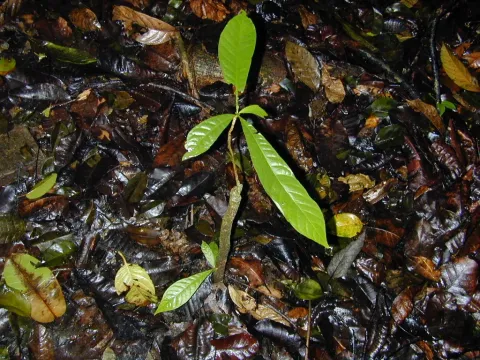
Tachigali
Tachigali
Tachigali is a genus of trees belonging to the Fabaceae (legume) family, native to the tropical forests of Central and South America. These trees are highly valued for their role as pioneer species in ecological succession.
What the section contains


Tachigali
Botanically, they are characterized by rapid growth rates and the ability to thrive in canopy gaps, where they reach maturity and reproduce faster than many other species in the forest.
The climate requirements include a warm, humid environment with high annual rainfall, as these trees are specifically adapted to equatorial weather patterns.
Soil preferences involve well-drained, nutrient-rich substrates. As legumes, they contribute to soil health by fixing atmospheric nitrogen, provided the necessary rhizobia are present.
In practice, Tachigali is utilized in silvicultural programs to restore degraded landscapes and promote the return of secondary forest biodiversity.
The trees face threats from various wood-boring beetles that exploit the relatively soft tissue of the trunk, potentially weakening the structural integrity of the plant.
Fungal infections can develop in the humid forest understory, particularly affecting seedlings that have not yet reached the sun-exposed canopy layers.
Herbivory by leaf-eating insects poses a significant challenge, although the species often employs chemical and physical defenses, including relationships with protective ant colonies.
Environmental competition from aggressive invasive vegetation can stunt the growth of Tachigali, especially in areas where canopy cover is not managed properly.
Climatic instability and habitat fragmentation remain the most severe threats, as these factors disrupt the natural cycles of seed dispersal and germination.