
Yellow sweet clover
Melilotus officinalis Lam.
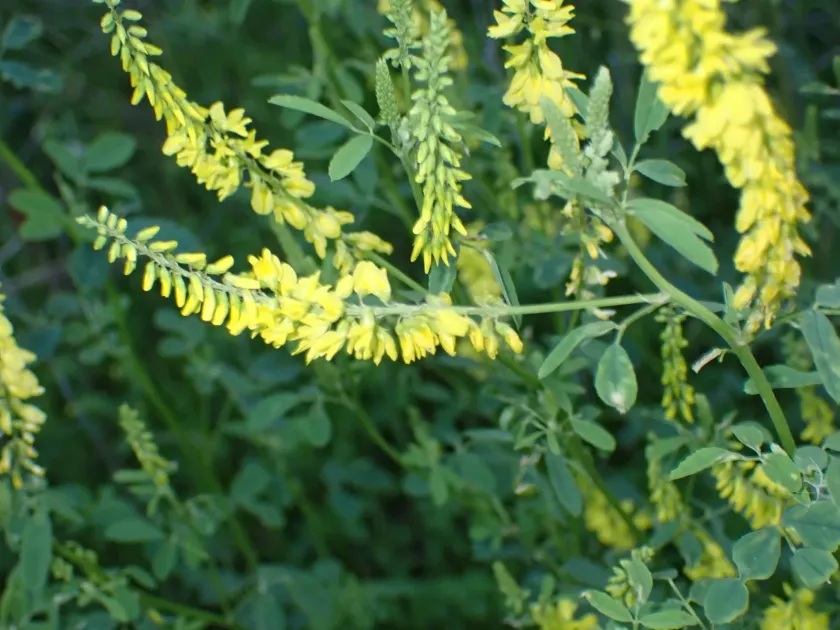
Description
Sowing dates
Yellow sweet clover is a biennial legume known for its exceptional hardiness and ability to adapt to diverse agro-climatic conditions.
The optimal time for sowing is early spring as soon as the soil is workable, allowing the crop to establish itself before the arrival of summer heat.
The seeding rate typically ranges from 12 to 16 kg per hectare, with a shallow sowing depth of 1-2 cm required to ensure rapid and uniform emergence.
Seed scarification is a mandatory step before planting, as hard seeds have a thick coat that inhibits germination without mechanical or chemical intervention.
It is often grown in pure stands for forage or as part of a seed mixture to improve soil structure and fix atmospheric nitrogen effectively.
Growing requirements
This crop thrives in various soil types, including sandy, rocky, and saline soils, where other traditional crops often struggle to produce a viable yield.
Yellow sweet clover is remarkably drought-tolerant, making it an excellent choice for arid regions where water management is a critical agricultural concern.
As a powerful soil improver, its deep taproot system penetrates compacted soil layers, enhancing aeration and drainage for subsequent crops in a rotation.
The plant is light-demanding and performs best in open, sunny fields, as excessive shade from weeds or trees can significantly hamper its development.
It is highly salt-tolerant, which makes it a preferred species for the reclamation of degraded lands that require biological restoration and nitrogen enrichment.
Yield
Green mass yields can reach up to 200–300 centners per hectare under favorable moisture conditions and well-managed farming practices.
Seed production generally yields between 4 and 8 centners per hectare, providing a reliable source of income for specialized seed growers.
Productivity peaks in the second year of growth, as the plant has by then established a robust root system capable of supporting vigorous vegetative growth.
Harvesting for forage should be timed during the early budding phase to ensure the highest protein content and maximum nutritional value for livestock.
The crop's ability to fix nitrogen enhances the soil's fertility, which contributes to the overall success and yields of the entire crop rotation system.
Main diseases and pests
Pests such as the clover leaf weevil can cause significant damage to foliage and flower buds, potentially reducing both forage quality and seed production.
Fungal diseases like powdery mildew and various leaf spots are more common in humid conditions and can affect plant health if fields are poorly managed.
Ascochyta blight is another concern, presenting as lesions on stems and leaves, which can lead to wilting and premature decline of the plant population.
Preventative measures, including proper crop rotation and the destruction of host weeds, are the most effective ways to manage potential pest and disease pressure.
When applying insecticides, care must be taken to protect pollinators, as yellow sweet clover is a highly attractive plant for honeybees and other beneficial insects.
Harvesting
Forage harvesting is best performed before full bloom, as the plants become stemmy and lignified quickly, which drastically reduces their digestibility.
Seed harvest is typically carried out using a two-stage method when the majority of pods turn brown to minimize shattering losses in the field.
Proper drying is essential when harvesting for hay to prevent the conversion of coumarin into dicoumarol, which can be toxic to cattle if consumed in large quantities.
Cutting height should be maintained at 10–12 cm to support healthy regrowth and ensure the plant survives through the winter for the following season.
After the final harvest, the incorporation of plant residue into the soil provides a significant boost in organic matter and nitrogen for future planting cycles.