
Sicilian melilot
Melilotus siculus (Turra) B. D. Jacks.
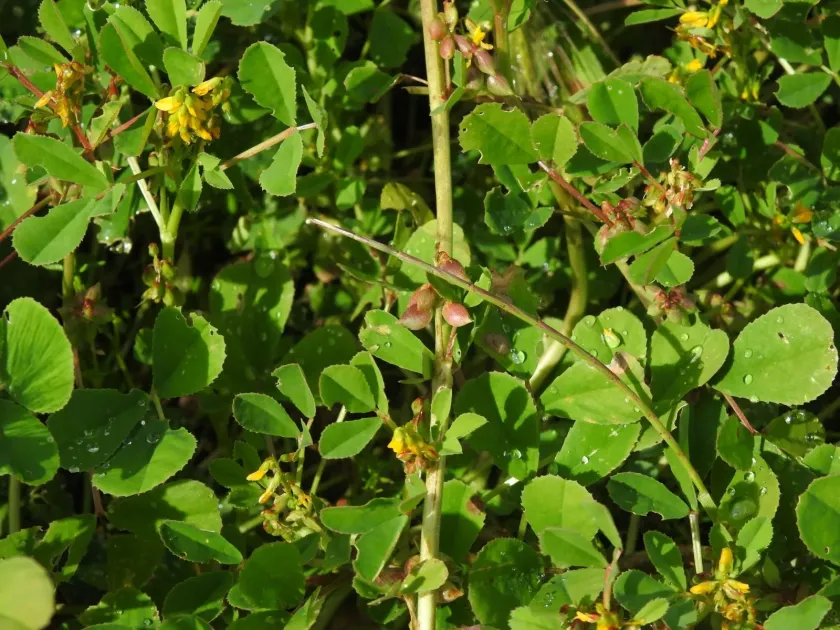
Description
Sowing dates
Sowing of Sicilian melilot is mainly carried out in spring when the soil warms up to +8...+10°C. Early spring is considered optimal, as it allows the plant to make the most efficient use of moisture accumulated in the soil after the winter period.
To achieve uniform germination, seeds require scarification, as they have a hard seed coat that hinders emergence. The seeding depth varies from 1 to 2 cm, depending on the soil texture and the moisture level of the field.
The seeding rate is calculated based on the intended use of the crop: it is higher for biomass production and lower for seed production. Ensuring good seed-to-soil contact is critical to accelerate germination, as the plant is sensitive to the drying of the topsoil.
When used in forage mixtures, Sicilian melilot is sown with grasses, which increases the nutritional value of the final feed. Given the plant's rapid initial growth, timely sowing helps the crop compete successfully against weeds.
Autumn sowing in regions with harsh winters is not recommended, as young seedlings may die if temperatures drop sharply before deep soil freezing. In southern regions, late autumn sowing may be permissible for early spring emergence.
Growing requirements
Sicilian melilot (Melilotus siculus) is a prominent halophyte, which determines its primary agronomic value. The crop can thrive in saline soils where other legume species demonstrate low productivity or fail to survive.
The plant belongs to the Fabaceae family and has the ability to form symbioses with nitrogen-fixing bacteria. This allows the crop to enrich the soil with nitrogen, making it a promising component in crop rotations on degraded lands.
Climate requirements include high drought tolerance and the ability to withstand periodic waterlogging. Sicilian melilot prefers open, sunny locations and does not tolerate heavy shading, which negatively affects growth rates and biomass accumulation.
Soil preferences include not only saline but also heavy clay structures. The crop demonstrates outstanding adaptation to alkaline and solonetzic soils, which allows it to be used as a phytoremediator for restoring the fertility of problematic lands.
For optimal development, the plant needs sufficient moisture during the initial growth phases. However, once established, the plant can withstand long periods of soil and atmospheric drought while maintaining its viability.
Yield
The green biomass yield of Sicilian melilot depends directly on the level of soil salinity and moisture availability during the growing season. In favorable conditions, the crop is capable of providing two cuts per season, ensuring a stable supply of nutritious forage.
An important productivity indicator is the protein content in dry matter, which remains high in this crop even when grown on saline soils. This makes melilot a valuable source of protein for livestock.
Seed yield potential depends on the activity of pollinators, as the plant is cross-pollinated. Implementing measures to protect bees and other pollinating insects significantly increases the seed output per unit area.
In the context of saline land reclamation, yield increases as the physical and chemical properties of the soil improve under the influence of the melilot root system. Deep root penetration helps structure heavy soils, gradually increasing the productivity of the plot.
Average biomass yields may vary over a wide range, but for this species, they are comparable to other forage melilots while offering significantly higher ecological resilience to environmental stress factors.
Main diseases and pests
Sicilian melilot possesses high resistance to most pathogens, but in conditions of high humidity, powdery mildew may occur. This fungal disease manifests as a white coating on leaves, which reduces the quality of the green biomass.
Pests typical of legumes, including weevils, can damage the generative organs and seedlings. Controlling the population of these insects is primarily necessary in seed fields to preserve the crop.
Bacterial leaf spots may occur during prolonged waterlogging or poor agricultural practices. Preventing water stagnation in fields is the primary measure for controlling the development of such infectious processes in the crop.
Weed vegetation poses a threat during the first month after seedling emergence. The slow development of the root system in the initial stages makes the crop vulnerable to fast-growing weeds, so early weed control is critical.
Protection measures include following correct crop rotations, using high-quality seed material, and timely phytosanitary monitoring. The use of chemical plant protection products must strictly comply with the regulations for forage crops.
Harvesting
Harvesting for green biomass is recommended during the budding phase, before the onset of mass flowering. During this period, the plant contains the maximum amount of nutrients and easily digestible protein for forage purposes.
When harvesting for hay, it is necessary to ensure high-quality drying of the mass to preserve the leaf surface, which is the most protein-rich part. Sicilian melilot dries quickly, which helps to reduce the time the cut mass remains in the field.
Harvesting for seeds is conducted when the majority of pods turn brown. It is important to avoid over-ripening, as the plant's pods are prone to shattering under mechanical impact, leading to significant seed yield losses.
When using combine harvesters, either swathing or direct combining with prior desiccation is applied. This allows for minimal losses and ensures high purity of the harvested seed material.
Post-harvest residues are incorporated into the soil as green manure. This ensures the return of organic matter and nitrogen accumulated by the crop during the growing season, which is essential for the biological restoration of saline soil fertility.