
Indian sweetclover
Melilotus indicus (L.) All.
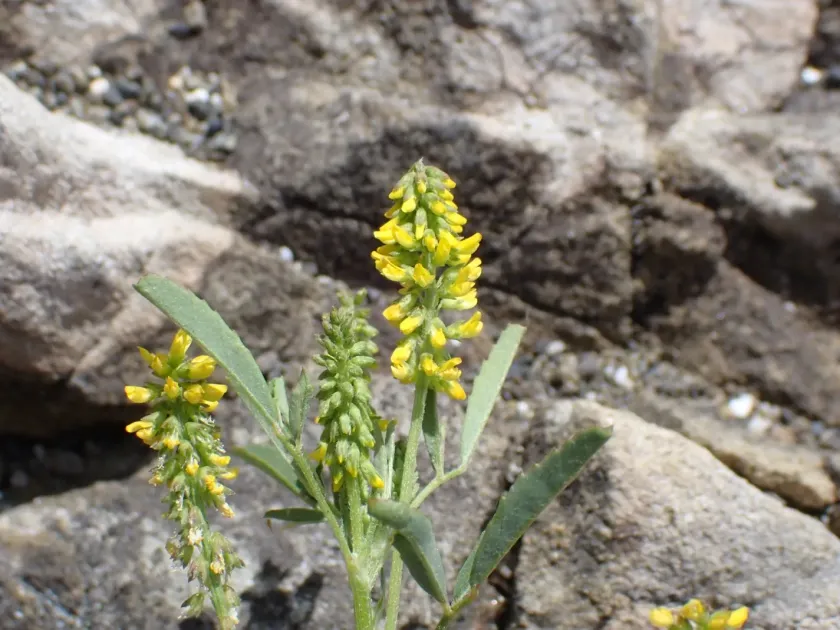
Description
Sowing dates
Indian sweetclover (Melilotus indicus) is an annual herbaceous plant belonging to the Fabaceae family. Sowing is typically carried out in the spring when soil temperatures reach 8–10 degrees Celsius, as seeds are sensitive to low temperatures during the early germination stage.
Early spring planting is considered optimal for achieving uniform emergence, as it allows the crop to utilize stored winter soil moisture efficiently. Seeding rates depend on the chosen method, with row planting typically requiring fewer seeds than broadcasting.
Seed scarification is a crucial preparatory step for sweetclover, as the seed coat is naturally hard and impermeable. This process significantly improves field emergence rates and ensures consistent plant development from the start.
The standard seeding depth ranges from 1 to 2 centimeters. In lighter, sandy soils, this depth may be increased to 3 centimeters to prevent the seedbed from drying out too quickly.
Rolling the soil after sowing is highly recommended to improve seed-to-soil contact, which is vital during dry springs to ensure reliable germination and early root establishment.
Growing requirements
This crop is highly adaptable, though it thrives in open areas with plenty of sunlight. Indian sweetclover is notably tolerant of various soil types, including saline environments, making it a valuable plant for soil amelioration.
The plant exhibits moderate drought resistance due to its deep, vigorous taproot system. However, during the flowering stage, the crop requires adequate moisture to produce high-quality seeds.
Sweetclover performs best in neutral to slightly alkaline soils. Growth may be hindered in acidic conditions, so liming is recommended for sites with low soil pH.
The plant is not overly demanding of high soil humus content, as it can fix atmospheric nitrogen through symbiotic relationships with root nodule bacteria. This makes it an excellent choice for enriching depleted soils.
In regions with high rainfall, the crop can suffer from waterlogging. It is essential to avoid sites with poor drainage or a high risk of standing water to maintain crop health.
Yield
The biomass of Indian sweetclover is primarily utilized as green forage or a green manure crop. Average green matter yields vary significantly depending on the region and the specific agronomic practices applied.
When used as a green manure, maximum biomass accumulation is observed during the early flowering phase. Incorporating the green mass into the soil at this stage provides significant improvements in soil physical and chemical properties.
Seed yield for this species is generally stable. Optimal growing conditions allow for high seed collection yields per hectare, making on-farm seed production a viable economic option.
In grass mixtures, sweetclover contributes to the overall productivity of forage fields. Including it in crop rotations has a positive impact on the yields of subsequent crops, particularly cereals.
Its agricultural use is influenced by the presence of coumarin in the plant tissues. Livestock feeding should be managed by regulating intake to avoid potential negative effects on milk or meat quality.
Main diseases and pests
Indian sweetclover is susceptible to various fungal diseases. Powdery mildew is the most common issue, often affecting foliage and stems during periods of high humidity and fluctuating temperatures.
Anthracnose can cause spots on vegetative organs, which reduces the nutritional value of the green mass. Preventive measures include strict crop rotation and high-quality seed treatment.
Pests such as weevils frequently damage seedlings in the early growth stages. Early detection is necessary to prevent widespread damage and maintain optimal stand density.
Aphids can also colonize sweetclover stands, feeding on the sap of young shoots. During heavy infestations, biological or chemical insecticides should be applied according to regulatory standards.
Root rot diseases pose a threat in poorly drained or waterlogged soils. Site selection and drainage control remain the primary methods of defense against these soil-borne pathogens.
Harvesting
Harvesting for green forage should be performed during the budding stage or early flowering. This timing ensures the highest protein content and an ideal balance of nutrients within the plant.
When harvesting for seed, the crop should be cut when the majority of pods have turned brown. It is important to work during the early morning or late evening hours to minimize seed shattering caused by mechanical impact.
Two-stage harvesting (swathing followed by threshing) allows the seeds to finish maturing and helps reduce the moisture content of the green mass before final threshing.
Post-harvest seed processing includes cleaning and drying to a moisture content of no more than 12-14 percent. Proper storage requires dry, well-ventilated conditions.
When utilized as a green manure, harvesting consists of shredding the green mass with a mulching mower, followed by incorporation into the soil using disc harrows or a plow.