
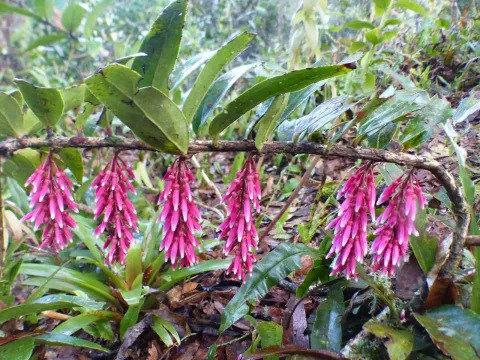
Thibaudia
Thibaudia
Thibaudia is a genus of evergreen shrubs belonging to the Ericaceae (heather) family. These plants are often epiphytic or hemiepiphytic in their natural habitat. They are highly regarded for their leathery leaves and tubular or urceolate flowers arranged in clusters.
What the section contains
Thibaudia
The natural range of Thibaudia spans the high-altitude regions of Central and South America, primarily within the Andean mountains. They are typically found in cloud forests where humidity is high, temperatures are moderate, and light is filtered by the forest canopy.
For successful cultivation, Thibaudia requires acidic, well-draining substrates rich in organic matter. An optimal container mix should include conifer bark, peat, and perlite to ensure proper root aeration and moisture retention without saturation.
Climate requirements for Thibaudia include a need for stable temperatures without extreme fluctuations. The plant is sensitive to intense heat and direct sunlight, preferring the filtered light conditions of a greenhouse or shaded conservatory.
Agricultural management requires maintaining consistent soil moisture. Overwatering must be avoided to prevent root rot, and regular misting is recommended in controlled environments to simulate the high humidity of the cloud forest.
The primary use of Thibaudia is in ornamental horticulture and botanical collection display. The plant is prized by enthusiasts for its exotic aesthetic, striking flower shapes, and unique, berry-like fruits that add to its visual appeal.
Thibaudia is not widely grown as a commercial food crop. While some species produce edible berries, their production is not currently developed for mass agriculture, making the genus primarily a subject of interest for rare plant collectors.
Biological productivity in an ornamental context is measured by the quality of flowering and the density of foliage. When provided with optimal conditions, these shrubs can be long-lived perennials that maintain consistent ornamental value.
Propagation is typically achieved through seeds or cuttings in specialized nursery settings. Success rates for cuttings are highly dependent on the strict maintenance of environmental parameters such as soil temperature and ambient humidity.
The economic potential of Thibaudia is also linked to the landscape design industry in tropical regions. Their epiphytic nature makes them excellent candidates for vertical garden installations and specialized botanical displays.
Thibaudia is susceptible to several pathogens common to the Ericaceae family. The most significant threat is fungal infection, such as Phytophthora, which can thrive if drainage is poor and the root zone remains waterlogged.
Common pests found on the plant include spider mites and mealybugs. These pests attack the delicate leaf surfaces and floral buds, leading to stunted growth, tissue damage, and an overall reduction in the plant's aesthetic quality.
Pest management relies on the careful application of systemic insecticides and acaricides. Caution is required during chemical application, as the leaves can be sensitive to certain compounds, potentially leading to phytotoxicity.
Proactive disease management involves regular ventilation of growing spaces and the thorough sterilization of pruning tools. Using sterile potting media is essential when repotting to prevent the introduction of soil-borne pathogens.
Because Thibaudia lacks natural resistance to local pests in non-native regions, constant phytosanitary monitoring is necessary for plants kept outdoors in warmer climates to prevent infestations from spreading.