
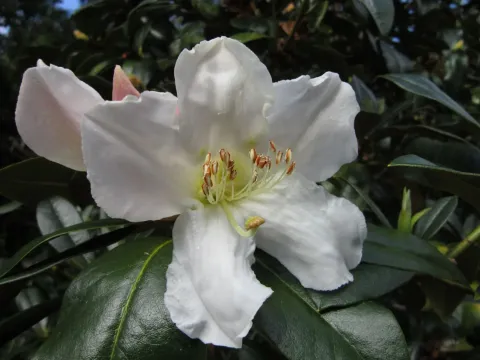
Thick-leaved Rhododendron
Rhododendron crassum
Rhododendron crassum, commonly known as the thick-leaved rhododendron, is an evergreen shrub belonging to the Ericaceae family. It is recognized for its robust, leathery foliage and clusters of fragrant, bell-shaped flowers that appear during the spring and early summer seasons.
What the section contains
Thick-leaved Rhododendron
Native to the high-altitude regions of the Himalayas and parts of Southeast Asia, this species thrives in cool, humid environments. In its natural habitat, it grows in mountain forests where the soil is consistently moist and acidic, often enriched with decaying organic matter.
Cultivation requires strict adherence to soil parameters. The plant demands a well-draining, acidic growing medium with a pH between 4.5 and 5.5. Gardeners should incorporate organic materials such as peat moss or pine bark to ensure the soil structure mimics the plant's native forest floor.
Regarding climate requirements, the species prefers locations with dappled shade, which protects it from the intense midday sun that can scorch its thick leaves. It also requires a wind-sheltered spot to maintain humidity levels around the foliage, especially during the dry periods.
The primary horticultural use of Rhododendron crassum is as an ornamental plant in temperate gardens. It serves as an excellent focal point in landscape design, particularly when planted in groups or as part of specialized ericaceous shrub borders.
The most significant pathological threat to this species is Phytophthora root rot. This fungal disease is almost always triggered by poor soil drainage, which keeps the root system in an oxygen-deprived and overly wet environment for too long.
Insect pests such as the rhododendron bug, spider mites, and scale insects frequently attack the leaves. Infestations lead to chlorosis, stunted growth, and can significantly mar the visual appeal of the foliage if left unchecked.
Effective management includes maintaining optimal soil pH to keep the plant vigorous. A healthy plant is naturally more resilient against attacks. Regular applications of organic mulch help maintain temperature stability at the root level and prevent weed competition.
When chemical treatments are necessary, it is essential to use specific fungicides or horticultural oils tailored for ericaceous plants. Over-application of chemicals can lead to leaf burn, so precision in dosing is highly recommended by agronomic standards.
Periodic pruning is essential for disease prevention, as it encourages better air circulation within the canopy. By removing dead or crossing branches, the gardener reduces the potential for mold and bacterial buildup in the plant's interior.