
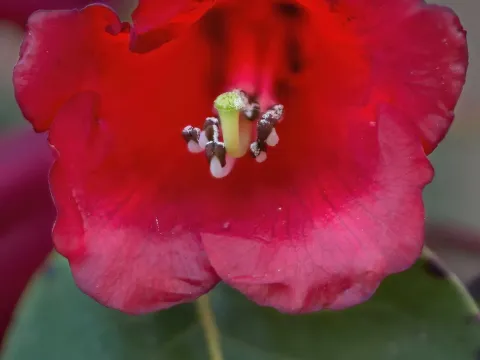
Thomson's rhododendron
Rhododendron thomsonii
Thomson's rhododendron (Rhododendron thomsonii) is a prominent evergreen shrub belonging to the Ericaceae family. Native to the high-altitude forests of the Himalayas, this species thrives in cool, misty environments typical of mountainous regions in India, Nepal, and Bhutan.
What the section contains
Thomson's rhododendron
The plant requires specific site conditions to mimic its natural habitat. It prefers partial shade and protection from direct midday sun, which is essential to prevent leaf scorch and to protect the delicate root system from high soil temperatures.
Soil requirements are strict: the substrate must be highly acidic, well-aerated, and possess excellent drainage. Gardeners typically use a mix of peat moss and pine bark to ensure the necessary pH level remains between 4.5 and 5.5, promoting healthy growth.
Climate management is crucial for this species. It demands a humid atmosphere and protection from harsh, drying winds. During periods of drought, supplemental irrigation with soft, lime-free water is necessary to keep the soil consistently moist but not waterlogged.
Fertilization should be limited to specific Ericaceous fertilizers. Avoiding alkaline compounds is mandatory, as even minor changes in pH can lead to nutrient lockout and severe chlorosis, compromising the health and aesthetic value of the shrub.
The most common disease threats for Rhododendron thomsonii are fungal infections, particularly Phytophthora root rot. These pathogens thrive in poor-draining soils, making effective drainage management the first line of defense against plant loss.
Pest issues include the rhododendron bug, which feeds on the foliage, causing stippling and general decline. Spider mites are also prevalent during hot, dry spells, often requiring targeted treatment with acaricides to protect the plant's health.
Regular monitoring of the foliage is essential to detect early infestations or symptoms of disease. Inspecting the undersides of leaves and ensuring good ventilation around the canopy can significantly reduce the pressure from both pests and fungal pathogens.
Integrated pest management (IPM) practices, including the removal of dead or infected branches and the application of fungicides, are recommended for maintaining plant vigor. Preventive measures are always more effective than remedial action once a disease has established.
By providing optimal environmental conditions and practicing rigorous sanitation, gardeners can maintain the health of these shrubs, allowing them to produce their characteristic bell-shaped flowers consistently throughout the blooming season.