
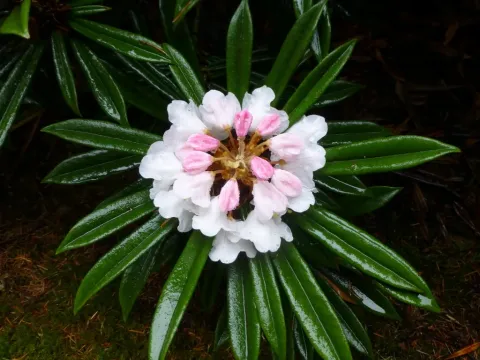
Thayer's rhododendron
Rhododendron thayerianum
Thayer's rhododendron (Rhododendron thayerianum) is an evergreen shrub belonging to the Ericaceae family. Native to the mountainous regions of Sichuan, China, this species is well-known for its distinctive narrow leaves and its adaptation to cool, high-altitude alpine environments.
What the section contains
Thayer's rhododendron
To cultivate this plant successfully, the soil must be acidic, ideally with a pH range of 4.5 to 5.5. A mixture of peat moss, pine needles, and coarse sand provides the necessary structure, allowing for adequate drainage while maintaining the moisture-retentive properties essential for the root system.
This shrub thrives in partial shade, where it is shielded from intense afternoon sunlight that can scorch its evergreen foliage. Adequate spacing and protection from cold, drying winds are crucial for maintaining the plant's health throughout the year.
Watering should be performed with soft water, free from calcium or lime buildup. Maintaining a consistent soil moisture level is vital, yet it is equally important to avoid waterlogging, which significantly increases the risk of root rot pathogens developing in the substrate.
Fertilization should be limited to specific ericaceous formulations. Applying these inputs during the early growth season ensures steady development, while discontinuing the process by mid-summer allows the plant to transition into its winter dormancy cycle safely.
Root rot, often caused by Phytophthora, represents the most significant threat to the survival of the plant. This condition is usually the result of poor soil drainage or improper water management, necessitating strict attention to planting site selection.
Pests such as the rhododendron bug and spider mites frequently affect the leaves, leading to chlorosis and general plant decline. Early detection through regular monitoring and the use of targeted insecticides can help manage these infestations effectively.
Fungal leaf spots and powdery mildew can also occur, particularly in environments with high humidity and stagnant air. Enhancing airflow by avoiding overcrowding in the landscape is a fundamental preventive measure for maintaining a healthy shrub.
Nutrient deficiencies, specifically iron chlorosis, are common when the soil pH deviates from the required acidic range. Regular testing of the soil and the application of chelated iron can help rectify these issues and restore the plant's natural green color.
During the winter months, protecting the shrub from desiccation is essential. In cooler climates, young plants benefit from burlap screens or light covers, which reduce wind exposure and prevent the rapid loss of moisture through the leaves while the roots remain dormant.