
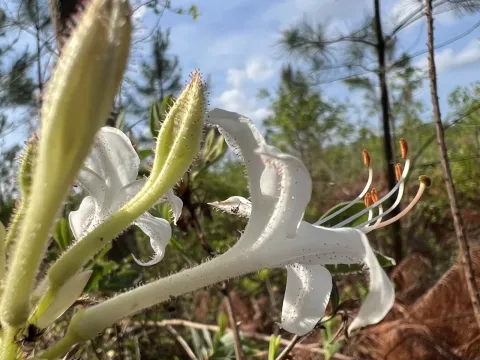
Swamp azalea
Rhododendron viscosum
Swamp azalea (Rhododendron viscosum) is a deciduous shrub belonging to the Ericaceae family, native to the eastern parts of North America, typically found in wetlands, swamps, and along stream banks.
What the section contains
Swamp azalea
The species requires acidic, well-draining, and moisture-retentive soil rich in organic matter to thrive, making it an excellent candidate for bog gardens or areas with consistently damp ground.
Botanically, this shrub is distinct for its sticky, glandular hairs on the foliage and new stems, which give it a unique texture and the specific name viscosum.
It prefers partial shade to full sun conditions, provided that the root zone is protected from overheating and drought, which can be achieved through regular mulching with pine needles or bark.
This plant is highly valued for its fragrant, white to light pink flowers that bloom in late spring and summer, adding significant aesthetic appeal to moist landscape settings.
Common pathological threats include root rot caused by poor soil drainage, and various fungal leaf spot diseases that can spread rapidly in high-humidity environments with stagnant air.
Pests like lace bugs and spider mites are frequent visitors that feed on the underside of leaves, causing yellowing, chlorosis, and general decline of the shrub's vigor.
Management of these threats is primarily cultural: ensuring proper spacing between plants for airflow and maintaining the correct soil pH to prevent stress, which is the leading cause of susceptibility to diseases.
Chemical control should be applied judiciously, as rhododendrons are sensitive to certain pesticides that can burn the foliage or disrupt the beneficial soil mycorrhiza necessary for nutrient uptake.
- Regular monitoring for signs of infestation
- Maintaining soil moisture consistency
- Application of specialized ericaceous fertilizers