
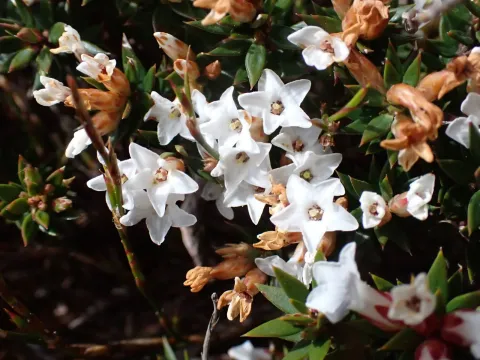
Swamp Epacris
Epacris paludosa
Swamp Epacris (Epacris paludosa) belongs to the Ericaceae family. It is a perennial evergreen shrub that naturally occurs primarily in the eastern regions of Australia.
What the section contains
Swamp Epacris
The plant prefers moist, boggy areas and is often found along the banks of streams and on peaty heaths. In cultivation, it requires the creation of specific conditions close to its natural habitat, particularly regarding substrate moisture.
For successful growth, Epacris requires acidic, well-drained soils. Despite the name "swamp," the plant does not tolerate waterlogging at low temperatures, as this promotes root rot.
Climatic requirements include a moderately warm environment. The plant is sensitive to severe frost and extreme heat, thus requiring container cultivation or greenhouse conditions in regions with harsh winters.
The economic use of Epacris is limited to ornamental gardening. Due to its striking bell-shaped flowers, it is highly valued in landscape design for creating rock gardens and heathland plantings.
The main threats to Epacris are fungal diseases that develop due to excessive soil moisture. The most dangerous is Phytophthora root rot, which affects the plant when cultivation techniques are compromised.
Pests typical for heath plants include spider mites and mealybugs. These insects can spread quickly in conditions of poor ventilation, especially when grown in greenhouses.
To prevent infestations, it is necessary to maintain a proper balance of air and soil humidity. Regular sanitary pruning promotes better airflow through the shrub and reduces the risk of pathogen development.
If the first signs of disease are detected, the use of broad-spectrum fungicides is recommended. It is important to avoid excessive nitrogen fertilization, which makes plant tissues more susceptible to infections.
Monitoring the condition of the root collar is a mandatory agrotechnical practice, as this specific area is most prone to rot processes.