
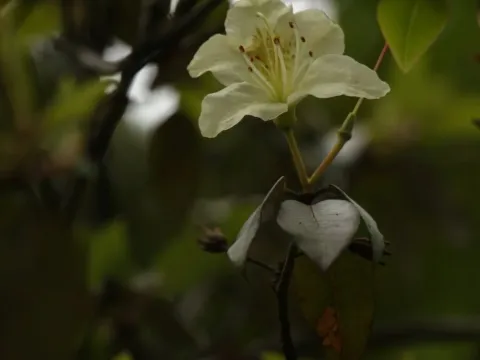
Three-flowered rhododendron
Rhododendron triflorum
The three-flowered rhododendron is an elegant shrub belonging to the Ericaceae family, native to the mountainous regions of the Himalayas and Western China. It is highly prized in horticulture for its subtle, light-colored flowers and delicate foliage.
What the section contains
Three-flowered rhododendron
Successful cultivation requires specific soil conditions, primarily an acidic substrate with a pH between 4.5 and 5.5. The soil must be rich in organic matter and possess excellent drainage properties to prevent root suffocation and subsequent decay.
Regarding light requirements, the plant prefers dappled sunlight or partial shade. Exposure to intense afternoon sun can scorch the leaves and weaken the plant, so planting under the canopy of deciduous trees is highly recommended to provide natural protection.
Watering is a critical aspect of agricultural practice for this species. The root system is shallow and sensitive to drought, necessitating consistent soil moisture, particularly during the growing season. It is best to use rainwater or acidified water for irrigation.
In landscaping, this rhododendron is utilized for woodland gardens and as an ornamental accent in shaded areas. Its growth habit makes it an excellent choice for pairing with other acid-loving plants such as ferns, azaleas, or dwarf conifers.
The primary health threats to this species include fungal infections such as phytophthora root rot. These pathogens thrive in poorly drained soils, making strict adherence to water management protocols essential for maintaining plant vigor.
Pests such as the rhododendron bug or spider mites can cause significant aesthetic damage. Symptoms include stippling on the leaves and a general loss of vitality, requiring periodic inspections and potential treatment with horticultural oils or insecticides.
Cultural prevention is the most effective way to mitigate disease. This involves maintaining optimal plant spacing for air circulation and removing any diseased or dead tissue immediately to prevent the spread of fungal spores across the foliage.
Winter protection is necessary in colder climates to prevent bud blast and foliage burn. Covering the shrubs with burlap or protective landscape fabric helps shield them from harsh desiccating winds and the fluctuating temperatures of late winter.
Finally, fertilization must be managed carefully using fertilizers formulated specifically for Ericaceous plants. Avoiding high-alkalinity amendments like lime is crucial, as they will disrupt nutrient uptake and lead to severe plant stress or chlorosis.