
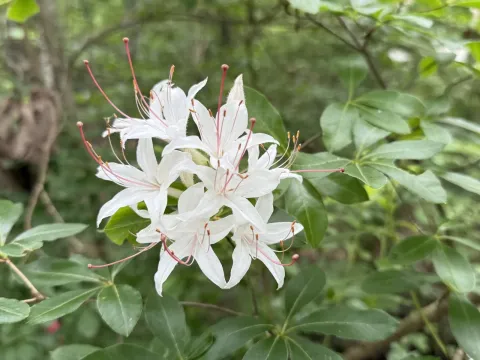
Sweet azalea
Rhododendron arborescens
The sweet azalea (Rhododendron arborescens) is a deciduous shrub belonging to the Ericaceae family. Native to the eastern United States, it naturally thrives in moist environments, often near streams, mountainous areas, and open woodland edges.
What the section contains
Sweet azalea
Agronomic success with this species depends heavily on soil chemistry. Like other members of the heath family, it requires acidic soil with a pH ranging from 4.5 to 5.5, which is rich in organic matter and well-draining to prevent root rot.
The plant performs best in partial shade. While it can tolerate some morning sun, exposure to intense afternoon heat can cause leaf scorch and drought stress, necessitating supplemental watering during dry spells.
Proper cultivation includes consistent moisture management. Utilizing an organic mulch layer—such as pine needles or pine bark—is essential to maintain soil acidity and stabilize moisture levels throughout the growing season.
In terms of usage, it is highly valued for its fragrant, white to soft pink flowers that bloom in early summer. Its naturalistic habit and pleasant scent make it an ideal candidate for woodland gardens and shaded shrub borders.
Phytophthora root rot is the most serious threat to sweet azalea, usually brought on by poor soil drainage. Improving the aeration and drainage properties of the planting site is the primary prevention strategy.
The rhododendron lace bug is a common pest that sucks sap from the foliage, leading to a mottled appearance. Regular scouting and the application of insecticidal soaps or systemic treatments help manage these populations.
Spider mites can become problematic during hot, arid weather. Maintaining high humidity around the foliage through careful overhead irrigation or site selection can mitigate the risk of infestation.
Powdery mildew may occur if air circulation is restricted or humidity is excessive. Thinning out the branches periodically ensures better airflow, reducing the likelihood of fungal spore development on the leaves.
Chlorosis, or yellowing of the leaves while the veins remain green, often indicates a micronutrient deficiency caused by improper soil pH. Correcting the soil balance is essential to restore plant health and vigor.