
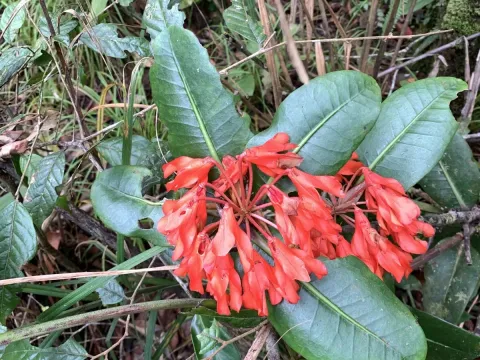
Thick-leaved rhododendron
Rhododendron crassifolium
Thick-leaved rhododendron (Rhododendron crassifolium) is a distinguished member of the Ericaceae family. Known for its leathery foliage and elegant growth habit, this evergreen shrub is a prized specimen in ornamental horticulture.
What the section contains
Thick-leaved rhododendron
The species originates from the subtropical regions of Southeast Asia. It thrives in environments characterized by high humidity, mild temperatures, and protection from direct, scorching sun exposure throughout the day.
For successful growth, the cultivation site must provide acidic soil with a pH ranging between 4.5 and 5.5. The substrate should be highly porous, rich in organic matter, and feature excellent drainage to prevent root rot.
Cultural requirements include consistent moisture management. Using organic mulch, such as pine bark or peat moss, is essential for keeping the root zone cool and maintaining optimal moisture levels during the growing season.
In terms of usage, the plant serves primarily as an ornamental focal point in landscape design. Its aesthetic appeal makes it suitable for shaded garden borders, woodland-style plantings, and container gardening in temperate zones.
Common health issues involve fungal infections like Phytophthora dieback and powdery mildew. These diseases are frequently triggered by poor air circulation and excessive moisture on the foliage.
Pest threats include the rhododendron lace bug and spider mites. These pests pierce the leaves, leading to chlorosis, stunted growth, and a significant decline in the plant's overall aesthetic quality.
Effective management strategies include the prompt application of fungicides and horticultural oils when symptoms are detected. Sanitation practices, such as removing affected branches, are also critical for control.
Planting in a location with natural airflow is highly recommended to minimize the development of pathogens. Proper spacing between shrubs prevents the humidity levels from spiking excessively during summer months.
Fertilizing with specialized acid-loving plant formulas helps build resilience. A healthy, well-nourished shrub is better equipped to withstand environmental stress and fend off minor insect infestations naturally.