
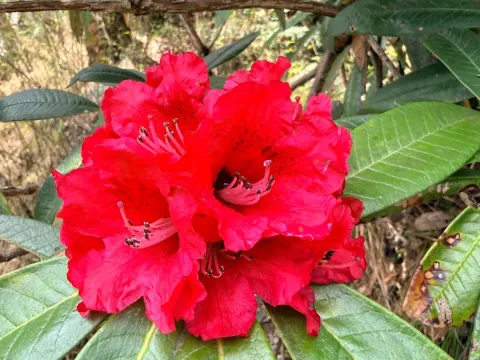
Tree rhododendron
Rhododendron arboreum
The Tree rhododendron (Rhododendron arboreum) is a significant species belonging to the Ericaceae family. Known for its tree-like stature, it can reach impressive heights, often exceeding 10-15 meters in its natural habitat.
What the section contains
Tree rhododendron
Native to the Himalayan regions, including India, Nepal, and Bhutan, this species is highly adapted to high-altitude temperate forests. It thrives in regions characterized by high humidity, frequent mists, and cool temperatures throughout the year.
Cultivation requirements focus heavily on soil acidity and drainage. The plant strictly requires acidic soil conditions (pH 4.5–5.5) and a substrate that allows rapid water runoff to prevent root rot issues.
Climatic preferences demand a site protected from harsh winds and intense afternoon sun. While it requires light, dappled shade is ideal to preserve the lush green foliage and ensure successful flowering during the spring season.
Economically, the tree is valued for its hard, close-grained wood used in local crafts. Furthermore, its showy flowers are edible and are traditionally processed into beverages and jams in various Himalayan cultures.
The most prevalent diseases affecting this species are fungal infections, specifically Phytophthora root rot and powdery mildew. These are often induced by poor site selection, heavy soils, or improper watering techniques.
Pest threats include the rhododendron lace bug, spider mites, and vine weevils. These pests can rapidly decrease the ornamental value of the tree by feeding on the leaves, leading to chlorosis and stunted growth.
Management of these threats involves integrated pest management strategies, focusing on maintaining tree vigor through correct fertilization. Applying mulch can also create a beneficial environment that discourages certain soil-borne pathogens.
Chemical control is effective but should be used cautiously to avoid damaging the plant's delicate root system. Systematic insecticides and broad-spectrum fungicides are standard in commercial nurseries for preventive care.
To keep the tree healthy, constant monitoring of leaf health is necessary. Any sign of yellowing or leaf drop should be investigated immediately, as these are often the first symptoms of stress caused by environmental or biotic factors.