
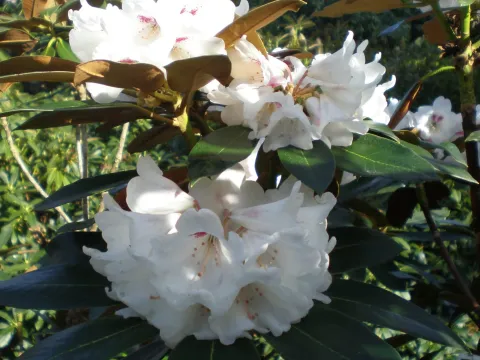
Traill's Rhododendron
Rhododendron traillianum
Traill's Rhododendron (Rhododendron traillianum) is an evergreen shrub or small tree belonging to the Ericaceae family. It is distinguished by its leathery, often hairy leaves and attractive, bell-shaped flowers.
What the section contains
Traill's Rhododendron
The species is native to the high-altitude forests and mountainous regions of southwestern China. It typically grows at elevations between 3,000 and 4,000 meters, thriving in cool and humid environments.
Successful cultivation requires acidic, well-draining soil rich in organic matter. Gardeners often amend the soil with peat moss or pine bark to ensure the necessary acidity and structure for root development.
Positioning is critical for this species; it performs best in partial shade. Excessive exposure to direct sunlight can stress the plant, leading to leaf scorching and potential wilting during hot summer months.
Ongoing maintenance includes regular mulching around the root zone. This practice preserves soil moisture, regulates temperature, and suppresses weed growth, which is vital for the shallow root system typical of this genus.
The most significant pathological threats include fungal pathogens such as Phytophthora, which commonly causes root rot. This usually occurs due to poor drainage and waterlogged soil conditions.
Pests such as the rhododendron leafhopper can cause significant damage. These insects feed on the undersides of leaves, causing chlorotic spots that reduce the plant's overall aesthetic and photosynthetic capacity.
Spider mites are another common issue, especially during hot, dry spells. They cause fine webbing and discoloration of the foliage, which can be mitigated by maintaining adequate humidity around the plant.
Powdery mildew may occur if air circulation is poor, particularly in dense plantings. Proper spacing and selective pruning of overcrowded branches help improve ventilation and reduce infection risk.
Weevils may also feed on leaf margins, leaving characteristic notched patterns. While rarely fatal, severe infestations can weaken young specimens, making regular inspections during the growing season advisable.