
Tsari rhododendron
Rhododendron tsariense
Description
Growing requirements
Rhododendron tsariense is an evergreen shrub belonging to the Ericaceae family, native to the high-altitude regions of southeastern Tibet. It is highly valued in horticulture for its compact growth habit and extreme hardiness in cool, misty environments.
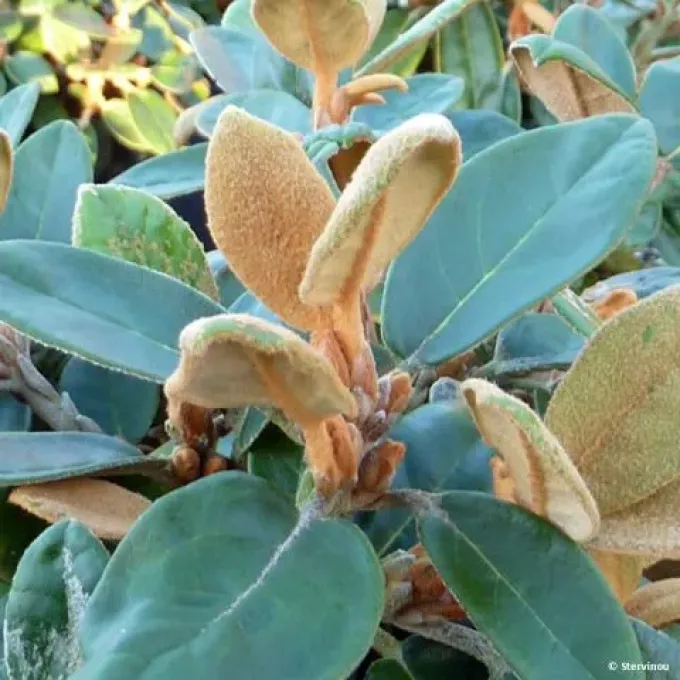
Botanically, this species is distinguished by its dense, slow-growing structure and elliptical leaves. A signature characteristic of the plant is the thick, woolly indumentum covering the undersides of the leaves, which typically turns a rusty-brown color as the foliage matures.
Successful cultivation requires specific soil conditions, primarily an acidic pH and excellent drainage. As an alpine plant, it thrives in organic-rich substrates that mimic the natural forest floor, ensuring that roots remain cool and well-aerated throughout the growing season.
The plant requires a sheltered location with partial shade to thrive, as direct sunlight can burn the leaves during the hottest months. Consistent moisture is crucial, and applying a thick layer of pine bark mulch around the base is standard practice to preserve soil acidity and moisture.
In ornamental landscaping, this rhododendron is utilized for rock gardens and as a structural element in woodland-style planting schemes. Its early spring display of bell-shaped, white to pinkish flowers makes it a highly desirable specimen for temperate climate gardens.
Main diseases and pests
The most significant pathological threats to this crop include Phytophthora root rot and leaf spot fungi, which are often exacerbated by poor site selection and waterlogged soil conditions.
Common insect pests include rhododendron lace bugs and spider mites, which can cause significant damage to the foliage; integrated pest management strategies are recommended to keep populations in check.