
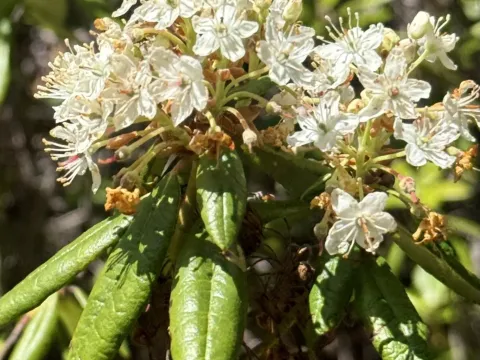
Trapper's tea
Ledum glandulosum
Trapper's tea, scientifically known as Ledum glandulosum, is a resilient evergreen shrub classified under the Ericaceae family. It is distinct for its fragrant, gland-dotted leaves and its specific habitat requirements in the wild.
What the section contains
Trapper's tea
The native range of this species extends across the western regions of North America, where it thrives in alpine and subalpine zones. It is commonly found near mountain meadows and edges of cold, damp forests.
To successfully cultivate this species, it is essential to replicate its natural soil conditions. The plants require acidic, well-drained, but consistently moist substrates rich in organic matter, typically achieved with peat-based amendments.
Climate adaptation is a critical factor for Trapper's tea. It performs best in regions with cool summers and high ambient humidity, as it is physiologically adapted to withstand harsh mountainous winters rather than dry heat.
Proper cultivation management involves the use of organic mulches like pine needles or peat moss to insulate roots from temperature fluctuations and to maintain the acidity level necessary for nutrient uptake.
Ledum glandulosum is naturally resistant to many pests due to the presence of potent volatile oils and resins in its glandular foliage, which serve as a natural chemical defense system.
The primary threats are fungal pathogens that flourish in waterlogged conditions. Root rot, caused by poor drainage, remains the most significant risk to the health of the shrub.
Leaf spot diseases may occasionally occur during seasons of prolonged rainfall if the planting site lacks sufficient air circulation around the crown of the plant.
While insect damage is minimal, aphids or spider mites can occasionally infest stressed plants during dry periods, requiring close monitoring of the underside of the leaves.
Maintaining a healthy, stress-free environment by ensuring adequate spacing and proper soil moisture is the best preventative strategy against potential disease outbreaks in this species.