
Umbel heath
Erica umbellata
Erica umbellata, commonly known as umbel heath, is a perennial evergreen shrub belonging to the Ericaceae family. It is native to the Iberian Peninsula and northwestern Africa, where it thrives in open, rocky habitats characterized by acidic and nutrient-poor soils.
What the section contains
Umbel heath
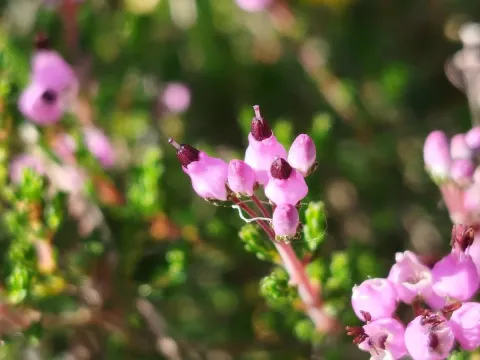
Botanically, the plant is distinguished by its small, needle-like foliage and vibrant pink-purple bell-shaped flowers arranged in umbels. It typically grows to a height of 30 to 60 centimeters, forming dense mounds that provide excellent ground cover in suitable environmental conditions.
For successful cultivation, Erica umbellata requires well-draining, acidic soil conditions. It is essential to avoid sites with waterlogging, as the plant's fine root system is highly susceptible to decay. Incorporating sand and peat into the planting hole helps replicate its natural habitat.
Regarding climate, this species prefers temperate areas with abundant sunlight. While it is hardy in its native range, it requires protection against severe frosts in colder regions. Using mulch made from pine needles or bark helps maintain root temperature and acidity levels year-round.
In terms of agricultural and horticultural use, the species is primarily valued as an ornamental plant. It is widely used in heather gardens, rockeries, and containers. Its early spring blooming period makes it a valuable asset for adding color to landscapes when other plants are just starting to emerge.
The primary threats to Erica umbellata include fungal pathogens such as Phytophthora, which thrive in poorly drained soils. These pathogens can cause root rot and rapid wilting of the plant. Maintaining optimal soil porosity is the most effective preventative measure against these diseases.
Pests are generally not a significant issue for established plants, although aphids may occasionally infest new shoots during warm and dry periods. If an infestation occurs, horticultural soaps or targeted insecticides should be applied carefully to avoid stressing the plant further.