
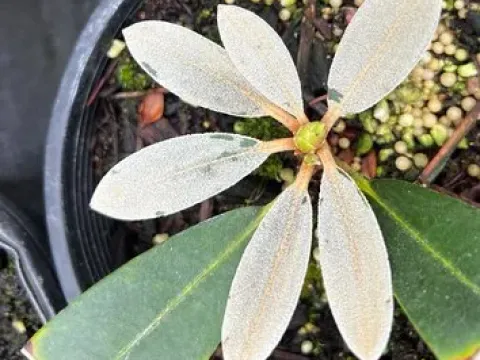
Uvarifolium rhododendron
Rhododendron uvarifolium
The Uvarifolium rhododendron (Rhododendron uvarifolium) is an evergreen shrub or small tree belonging to the Ericaceae family. It is native to the montane regions of China, particularly in Sichuan and Yunnan provinces, where it thrives at high elevations.
What the section contains
Uvarifolium rhododendron
Botanically, it is distinguished by its leathery leaves that feature a notable indumentum on the underside. The flowers typically bloom in clusters, exhibiting white to pale pink colors with distinct, often darker, markings inside the throat.
Cultivation requirements focus on providing acidic, well-draining, and humus-rich soil. Like most rhododendrons, this species cannot tolerate waterlogged ground, making a raised bed or a well-drained site essential for its survival.
It prefers a location with partial shade and protection from dry, harsh winds. A consistently moist but not saturated environment is ideal, mimicking the cool, humid conditions of its mountainous habitat.
As a landscape plant, Rhododendron uvarifolium serves as a high-value ornamental specimen. Its structural foliage and beautiful flowers make it an excellent choice for woodland garden designs and rockeries.
The primary threats include fungal pathogens such as Phytophthora root rot, which thrives in poorly drained soils. Leaf spot and powdery mildew may also occur during periods of high humidity and poor ventilation.
Pests such as the rhododendron bug, spider mites, and vine weevils can significantly damage foliage. These infestations are particularly problematic when the plant is already stressed by improper soil pH or moisture levels.
Management involves regular monitoring and the use of targeted insecticides when necessary. Maintaining proper soil acidity is crucial, as an alkaline shift frequently leads to iron deficiency, manifesting as chlorosis.
Preventative measures include removing dead wood and applying a layer of acidic mulch, such as pine needles or peat, to maintain soil structure and suppress opportunistic weeds.
While hardy, the plant benefits from protection during extreme cold snaps or scorching summer heat. Careful site selection and steady environmental management are the keys to long-term health and vitality of this species.