
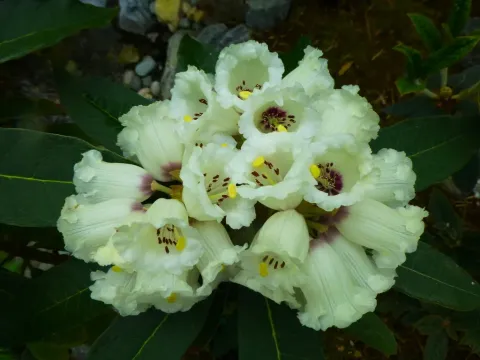
Rhododendron sidereum
Rhododendron sidereum
Rhododendron sidereum is an ornamental evergreen shrub belonging to the Ericaceae family, native to the high-altitude forests of Yunnan, China, and northern Myanmar. It is distinguished by its leathery, silver-backed foliage and large, showy trusses of creamy-yellow flowers.
What the section contains
Rhododendron sidereum
Successful cultivation requires highly acidic, well-draining, and humus-rich soil. The optimal pH range is between 4.5 and 5.5. It is critical to provide an efficient drainage system in the planting hole to prevent root rot, which is a common cause of failure for this species.
The climate requirements include a cool, moist environment with protection from direct sunlight and harsh, drying winds. These plants thrive in dappled light conditions under a canopy of larger trees, which helps to maintain the necessary atmospheric humidity.
Botanically, the species is known for its slow growth rate and architectural structure. The underside of the leaves is initially covered in a silvery indumentum that matures into a warm brown color, which is a diagnostic feature of the species in a garden setting.
Agronomic maintenance centers on mulching, which is essential for protecting shallow roots from temperature fluctuations and maintaining soil acidity. Fertilizers should be strictly formulated for ericaceous plants to ensure all nutritional needs are met without harming the soil chemistry.
Phytophthora root rot poses the most significant threat to the health of this rhododendron. It is primarily triggered by waterlogged soils or improper irrigation practices that lead to anaerobic conditions around the root zone.
Rhododendron lace bugs are common pests that feed on the underside of the leaves, resulting in stippling and discolored patches on the upper surface. Integrated pest management, including systemic insecticides, is recommended for severe infestations.
Powdery mildew can affect the foliage during periods of poor air circulation and high humidity. Ensuring proper plant spacing and thinning out dense branches can significantly reduce the incidence of this fungal issue.
Spider mites are frequently encountered during prolonged dry spells. Their presence is identified by fine webbing and a mottled appearance on the leaves, requiring regular monitoring and potential application of miticides.
Sanitation practices, such as removing fallen leaves and pruning away infected branches, remain the best defense against long-term disease spread in a professional or private collection.