
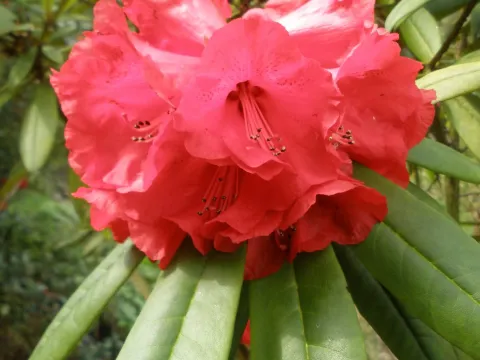
Rhododendron strigillosum
Rhododendron strigillosum
Rhododendron strigillosum is a prominent member of the Ericaceae family, widely recognized for its vibrant, bell-shaped red flowers and distinctive bristly stems. Native to the mountainous forests of Sichuan and Hubei in China, it has adapted to thrive in cool, humid, and forested environments.
What the section contains
Rhododendron strigillosum
The plant strictly requires acidic soil conditions, typically with a pH range between 4.5 and 5.5. Gardeners must ensure excellent drainage by incorporating organic materials such as peat moss, pine bark, or leaf mold into the planting pit, avoiding heavy clay soils that retain excess moisture.
Light requirements are critical for the long-term health of this species. It prefers partial shade, protected from intense midday sun, which can scorch the glossy leaves. Dappled shade provided by canopy trees or taller shrubs is the ideal setting for consistent growth and flowering.
As an evergreen shrub, it requires moderate but consistent watering throughout the growing season. The root system is shallow and sensitive to drought; therefore, maintaining a thick layer of organic mulch around the base of the plant is essential to preserve moisture and regulate soil temperature.
In terms of climate, Rhododendron strigillosum performs best in regions with mild summers and cold winters, provided it is shielded from dry, desiccating winds. Proper site selection is the foundation of successful cultivation, as it significantly reduces the need for frequent corrective interventions.
The most common health issues for this species include fungal pathogens like Phytophthora root rot. These problems are almost exclusively linked to poor drainage or overly compacted soil, which creates an anaerobic environment hostile to the delicate fibrous roots of the rhododendron.
Pest pressure often comes from rhododendron lace bugs, which feed on the underside of foliage, leading to yellowing (stippling) and a lack of vigor. Additionally, spider mites can become problematic during hot, dry spells, necessitating regular inspection of the leaves.
- Apply preventive fungicide treatments during the early spring bloom season.
- Use horticultural oils or soaps to control mite populations at the first sign of infestation.
- Conduct regular manual removal of dead or crossing branches to improve air circulation.
Nutrient deficiencies, particularly iron chlorosis, are common when the soil pH rises above the ideal threshold. If the leaves turn yellow between the veins while the veins remain green, soil acidification treatments or the application of chelated iron supplements should be performed.
Overall, maintaining the vitality of the plant depends on vigilance and precise adherence to its environmental niche. By managing soil acidity and preventing moisture stress, gardeners can successfully keep Rhododendron strigillosum healthy for decades.