
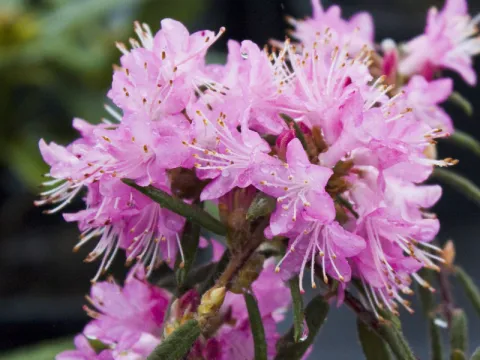
Rhododendron spiciferum
Rhododendron spiciferum
Rhododendron spiciferum is a charming evergreen shrub belonging to the Ericaceae family. Originating from the mountainous regions of China, particularly Yunnan and Guizhou, it is highly valued in ornamental horticulture for its unique foliage and distinct flowering habit.
What the section contains
Rhododendron spiciferum
This species thrives in temperate, humid climates and requires a specific soil profile. It is strictly acidophilic, meaning it must be planted in soil with a pH ranging between 4.5 and 5.5 to ensure proper nutrient uptake and overall plant health.
The planting site should offer partial shade, as the plant is sensitive to intense afternoon sun which can scorch its delicate leaves. Adequate air circulation is crucial to prevent the build-up of excess humidity around the foliage.
Soil drainage is perhaps the most critical factor in its agronomy. Since the root system is fibrous and susceptible to rot, it is essential to prepare a well-draining substrate typically composed of pine needles, peat, and coarse sand or perlite.
Maintenance includes regular mulching, which serves two purposes: conserving soil moisture and naturally acidifying the environment as the mulch decomposes. Watering should be conducted using soft water, as tap water with high mineral content can increase soil pH over time.
Phytophthora root rot remains the primary pathological threat to Rhododendron spiciferum. It is usually exacerbated by poor drainage and waterlogged soil conditions, leading to rapid wilting and eventual death of the specimen.
Insects like the rhododendron bug can cause significant damage by piercing leaves and extracting sap, resulting in mottled, unhealthy foliage. Monitoring the undersides of the leaves during the spring is vital for early detection.
Spider mites are common during prolonged dry periods, feeding on the leaf undersides and causing stippling. Increased humidity through misting or site selection can help mitigate these infestations effectively.
Powdery mildew may occur if the plants are placed in areas with insufficient ventilation or high humidity trapped within the canopy. Improving airflow and applying systemic fungicides can help control the spread.
Preventative care is centered on maintaining the vigor of the plant through correct fertilizing routines specifically designed for Ericaceous plants. Avoiding over-fertilization is key to preventing chemical stress to the roots.