
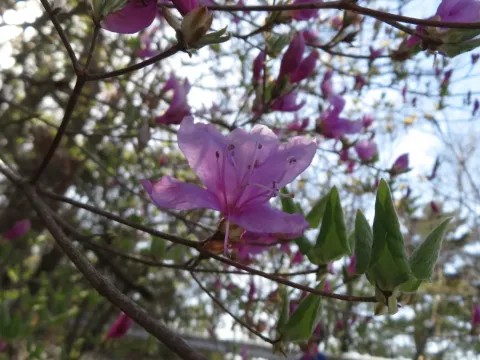
Rhododendron reticulatum
Rhododendron reticulatum
Rhododendron reticulatum is a deciduous flowering shrub belonging to the Ericaceae family. Native to the mountainous regions of Japan, it is highly valued for its vibrant purple-pink blooms that appear before the foliage develops in early spring.
What the section contains
Rhododendron reticulatum
Successful cultivation of this species depends heavily on soil conditions. These plants thrive exclusively in acidic, well-drained, and organic-rich soil. Amending garden soil with sphagnum peat moss and pine needles is essential to replicate its natural forest habitat.
Proper site selection involves choosing an area with dappled shade or protection from harsh afternoon sun. The plant's root system is shallow and sensitive to drought, necessitating consistent soil moisture and a thick layer of mulch to maintain root coolness.
The botanical structure of the leaves, marked by distinct reticulated veins, provides lasting seasonal interest. Regular pruning after flowering helps maintain a compact, bushy shape and encourages vigorous growth for the following season.
Fertilization should be handled with care using fertilizers specifically formulated for ericaceous plants. Avoid any calcium-rich or alkaline supplements, as these will inhibit nutrient uptake and lead to rapid plant decline.
Root rot is the most significant threat to Rhododendron reticulatum, often caused by heavy or waterlogged soil conditions. Ensuring excellent drainage through the use of raised beds or site modification is the primary defense strategy.
Lace bugs are common pests that feed on the undersides of leaves, leading to mottled foliage. If an infestation is detected, insecticidal soap or systemic treatments applied in early spring are recommended for control.
Powdery mildew can affect the plant during humid, stagnant conditions. Improving air circulation around the shrub by proper spacing and thinning branches can significantly reduce the risk of infection.
Vine weevils can damage roots and foliage, particularly in container-grown specimens. Monitoring for notched leaf edges is an early indicator that requires immediate intervention with beneficial nematodes or appropriate pesticides.
Iron deficiency, or chlorosis, frequently presents as yellowing leaves while the veins remain green. This is a direct consequence of a high pH environment and should be addressed by adjusting the soil acidity using sulfur compounds.