
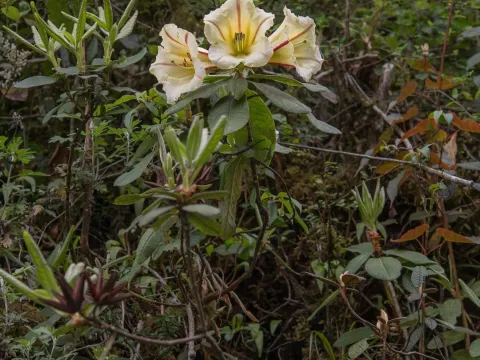
Rhododendron rhabdotum
Rhododendron rhabdotum
Rhododendron rhabdotum is a remarkable evergreen shrub belonging to the Ericaceae family. It is widely recognized for its striking, trumpet-shaped flowers, which feature prominent red or maroon stripes on the outer surface of creamy-white petals, creating a high-contrast aesthetic.
What the section contains
Rhododendron rhabdotum
Native to the high-altitude regions of Bhutan and the Himalayas, this species thrives in cool, temperate environments. It naturally grows on mountain slopes at elevations ranging from 2,000 to 3,500 meters, where the climate is characterized by high humidity and consistent moisture.
Cultivation requires acidic, well-draining soil rich in organic matter. Gardeners must replicate the forest-floor environment by using a substrate mixture consisting of peat moss, pine needles, and coarse grit to ensure proper root aeration and maintain the required low pH level.
Regarding light requirements, the plant performs best in dappled shade. Direct exposure to the intense midday sun can scorch the foliage and reduce the vigor of the plant, while total shade might negatively impact flower production and overall growth density.
Watering is a critical aspect of the plant's maintenance routine. It requires soft, lime-free water to maintain the acidity of the growing medium. During the growing season, consistent moisture is essential, but the roots must never be allowed to sit in waterlogged soil to prevent rot.
Phytophthora root rot remains the most serious threat to Rhododendron rhabdotum, usually triggered by poor drainage or overwatering. Prevention involves strict soil management and the use of specialized fungicides if the pathogen is suspected in the garden environment.
Powdery mildew is a common fungal issue that manifests as a white, dusty growth on the leaves, especially when airflow is restricted. Improving ventilation through careful pruning and applying appropriate fungicidal sprays is recommended to manage outbreaks effectively.
Rhododendron bugs are significant pests that pierce the leaves to feed on cell sap, leading to stunted growth and leaf discoloration. Integrated pest management strategies, including the use of systemic insecticides, should be implemented early in the season.
Spider mites can be particularly troublesome during hot, dry spells. These pests colonize the underside of leaves and can be managed by increasing humidity around the shrub and, when necessary, applying miticides during the early stages of infestation.
Scale insects may also appear on the stems of the plant, drawing sap and weakening the shrub. Physical removal using soft brushes combined with horticultural oil treatments during the dormant phase is an effective way to keep the plant population healthy and free of pests.