
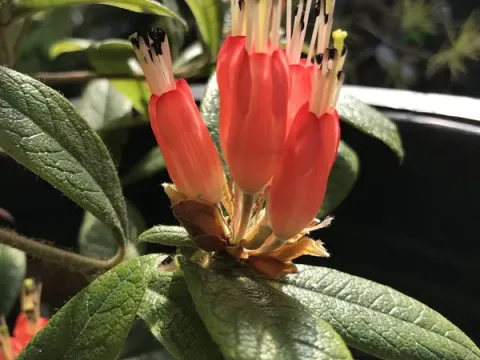
Rhododendron spinuliferum
Rhododendron spinuliferum
Rhododendron spinuliferum is a distinct evergreen shrub species belonging to the Ericaceae family, native to the high-altitude forests of Yunnan, China. It is highly valued for its unique, tubular, red-to-orange flowers that bloom in clusters.
What the section contains
Rhododendron spinuliferum
This species requires acidic soil conditions with a pH value between 4.5 and 5.5 to flourish. It thrives in well-draining, organic-rich mediums, such as a mix of peat moss, pine needles, and horticultural sand.
Regarding climate, it prefers cool, moist environments and dappled sunlight. Intense direct sunlight can lead to leaf scorch and dehydration, making it essential to plant it under a canopy or in a protected, north-facing garden area.
Regular irrigation is vital as the root system is shallow and sensitive to drying out. Consistent moisture must be balanced with good soil drainage, as waterlogged conditions quickly lead to root rot and plant decline.
Mulching is a standard practice for this cultivar; applying a layer of pine bark or leaf mold helps retain soil moisture, suppresses weeds, and maintains the necessary soil acidity levels throughout the growing season.
The most common health issues for this shrub include Phytophthora root rot, which is usually triggered by inadequate drainage and excessively wet soil conditions during the dormant period.
Fungal leaf spots can also occur if air circulation is poor, particularly in crowded planting schemes where humidity remains trapped around the foliage.
Pests such as rhododendron lace bugs are significant threats, as they feed on the underside of leaves, causing a bleached, stippled appearance that reduces the plant's ornamental quality.
Integrated pest management, including regular inspection and the use of targeted horticultural oils or insecticides, is necessary to keep the population of sap-sucking insects in check.
Preventative care involving balanced fertilization and avoiding overhead watering in the evening significantly reduces the incidence of both fungal infections and insect infestations.