
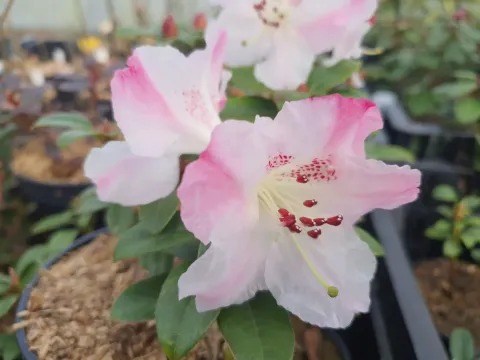
Moupin rhododendron
Rhododendron moupinense
The Moupin rhododendron (Rhododendron moupinense) is an evergreen ornamental shrub belonging to the Ericaceae family. Native to the mountainous regions of China, specifically Sichuan province, this species is typically found in moist, shaded forest habitats and rocky outcrops at high altitudes.
What the section contains
Moupin rhododendron
The plant is highly valued for its early blooming season, which often occurs in late winter or early spring. The flowers are relatively large for the size of the plant, ranging from pure white to various shades of pink and purple, often emitting a sweet, delicate fragrance that enhances garden aesthetics.
For successful cultivation, it requires acidic, well-draining, and humus-rich soil. Because the root system is shallow and sensitive, proper site preparation is essential. It is highly recommended to amend native soil with acidic peat and pine needles to recreate the plant's natural woodland environment.
This rhododendron thrives in partial shade or filtered light, avoiding the harsh midday sun which can scorch the foliage. Protection from strong, drying winds is crucial, as the plant prefers a sheltered position where the humidity remains consistent throughout the growing season.
Regular maintenance involves keeping the soil consistently moist but never waterlogged. Mulching the base of the plant is standard practice; it helps regulate soil temperature, suppress weeds, and slowly add organic matter to the substrate as it decomposes over time.
The primary threats to the health of the Moupin rhododendron are fungal diseases such as Phytophthora root rot and powdery mildew. These issues are most prevalent in poorly drained soils or areas with poor air circulation, making site selection a critical factor for long-term health.
Pest problems commonly involve rhododendron bugs and spider mites, which feed on sap and can cause leaf yellowing or discoloration. Effective management strategies include maintaining vigorous plant health through correct fertilization and applying horticultural oils or appropriate insecticides when infestations are detected.