
Monotropastrum
Monotropastrum
Monotropastrum (Monotropastrum) belongs to the Ericaceae family. It is a highly specialized plant that is not an agricultural crop in the traditional sense, as it lacks chlorophyll and relies entirely on symbiosis with fungi.
What the section contains

Monotropastrum
Unlike common crops, this plant does not require sunlight for photosynthesis. Its natural habitat includes the forests of East and Southeast Asia, where it grows in deep shade under the forest canopy.
For the development of Monotropastrum, a healthy forest ecosystem with specific mycorrhizal fungi is critical. The soil must be rich in organic matter, have high humidity, and maintain a low pH level characteristic of forest leaf litter.
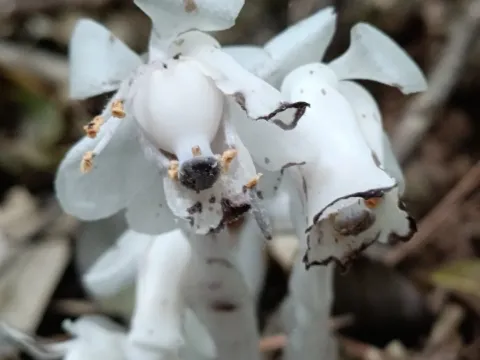
Biologically, the plant is a perennial that spends most of its life underground as rhizomes. The above-ground parts emerge only during the flowering and seed production period, displaying an unusual white or pinkish color due to the lack of pigments.
There is no commercial use for this species, as it cannot be cultivated in fields. Research into Monotropastrum is valuable for botany, ecology, and understanding the complex mechanisms of myco-heterotrophy in the wild.
The main threat to this plant population is the destruction of its natural habitat. Deforestation leads to changes in the microclimate and the collapse of fungal networks that are essential for the survival of Monotropastrum.
Because the plant lacks the defensive mechanisms developed for agricultural crops, it is extremely sensitive to chemical amendments and fertilizers. Any human intervention in soil composition immediately disrupts its life cycle.