
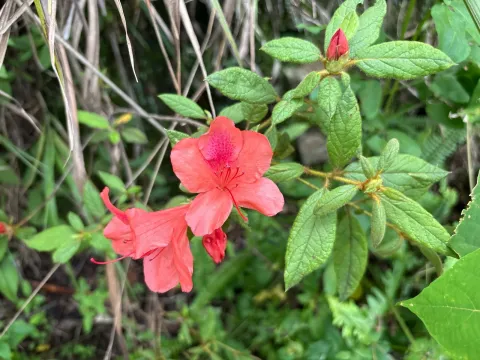
Oldham's rhododendron
Rhododendron oldhamii
Oldham's rhododendron (Rhododendron oldhamii) is an evergreen to semi-evergreen shrub belonging to the Ericaceae family. It is native to the mountain forests of Taiwan, where it thrives in high-altitude environments.
What the section contains
Oldham's rhododendron
This species requires acidic, well-draining soil rich in organic matter. A pH range between 4.5 and 5.5 is necessary to ensure the plant can efficiently absorb the required nutrients from the substrate.
In terms of light, the plant prefers dappled shade or partial sun. Exposure to intense afternoon sun should be avoided as it can scorch the foliage and negatively impact the health of the shrub.
Climatic conditions for this rhododendron include moderate temperatures and high air humidity. In colder regions, providing winter protection is essential to prevent frost damage to the root system and buds.
Proper water management is critical for this species. It requires consistent moisture, but the soil must never become waterlogged, as poor drainage is a leading cause of root rot in rhododendrons.
Fungal diseases, particularly Phytophthora and gray mold, pose significant threats to the plant. These pathogens often thrive in stagnant, humid environments with poor air circulation.
Pests such as lace bugs and spider mites are common enemies that feed on the leaves. These infestations can lead to leaf yellowing and a general decline in the plant's overall vitality.
To maintain a healthy plant, gardeners should inspect foliage regularly for signs of pest activity. Early detection allows for the prompt application of control measures before damage becomes severe.
Maintaining a layer of organic mulch around the base of the plant helps retain soil moisture and suppresses weeds, which are potential hosts for various pathogens and pests.
Pruning should be performed with sterilized tools to prevent the transmission of diseases. Removing dead or diseased branches helps improve air flow through the canopy and promotes healthier growth.