
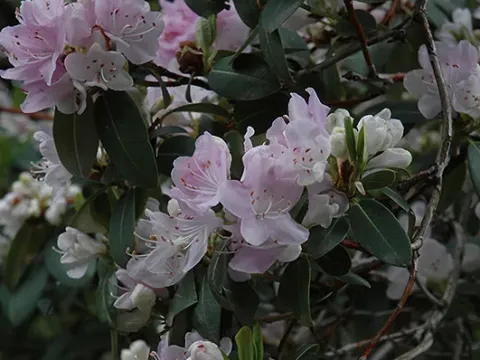
Mountain Rhododendron
Rhododendron oreotrephes
The mountain rhododendron (Rhododendron oreotrephes) is a distinguished member of the Ericaceae family, native to the high-altitude regions of Western China. It is highly valued in horticulture for its distinct bluish-green foliage and elegant, bell-shaped inflorescences.
What the section contains
Mountain Rhododendron
Cultivation requires specific soil conditions, characterized by high acidity (pH 4.5–5.5) and excellent drainage. The ideal growing medium is a mixture of peat moss, pine bark, and grit to ensure that the roots do not sit in water, which is critical for preventing root rot.
The plant thrives in partial shade, mimicking its natural mountainous habitat where it is protected from intense, direct solar radiation. Proper site selection includes finding a spot shielded from strong, drying winds, which can easily damage the evergreen leaves during the winter season.
Annual maintenance involves applying a thick layer of organic mulch, such as coniferous needles, which helps regulate soil moisture and temperature while maintaining the necessary acidity. Fertilization must be done carefully using slow-release acid-loving plant formulas.
Botanically, this species is characterized by its compact habit and ability to bloom profusely in the spring. It is relatively cold-hardy, surviving in temperate climates provided it receives adequate moisture and winter protection in harsher zones.
Major threats to the crop include fungal pathogens, particularly those causing leaf spot and dieback. Ensuring proper air circulation around the shrub is a primary preventive measure, alongside the application of preventative fungicides during wet periods.
Common pests affecting Rhododendron oreotrephes include the rhododendron leafhopper and scale insects. Regular inspection of the underside of leaves is recommended, as early detection allows for the effective use of horticultural oils or systemic insecticides to protect the plant.