
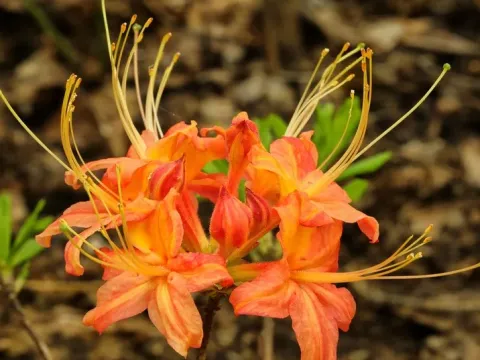
Oconee azalea
Rhododendron flammeum
Oconee azalea (Rhododendron flammeum) is a deciduous shrub belonging to the Ericaceae family. Native to the southeastern United States, specifically Georgia and South Carolina, this species is highly valued for its vibrant, fiery-colored blooms.
What the section contains
Oconee azalea
This plant thrives in acidic, well-drained soils rich in organic matter. Achieving the correct soil pH is critical for its long-term health, as Rhododendron flammeum is sensitive to alkalinity which causes nutrient lockout.
Ideally, this azalea should be planted in light, dappled shade provided by canopy trees. Excessive direct sunlight can scorch the leaves and dehydrate the root system, while deep shade will significantly reduce the number of blossoms.
Cultivation requires maintaining consistent soil moisture, particularly during the active growing season. Applying a thick layer of organic mulch, such as pine needles, helps regulate soil temperature and keeps the shallow root system cool.
Proper pruning should be done immediately after the flowering period ends to ensure that the plant has enough time to develop new buds for the next season. This practice encourages a bushier habit and promotes more vigorous growth.
Root rot is the most serious threat, usually caused by poorly drained soils or overwatering. Once the root system is compromised, the shrub may decline rapidly, making soil preparation the most vital cultural control.
Lace bugs are common pests that feed on the underside of leaves, causing a stippled or yellowed appearance. Regular monitoring during the spring and early summer is necessary to keep their populations in check.
Powdery mildew may appear on the foliage if air circulation is poor. Keeping the area around the shrub clear of debris and maintaining proper spacing can significantly reduce the risk of infection.
Iron chlorosis is frequently observed when the soil pH rises above the optimal level. This condition results in yellowing foliage with green veins and requires corrective soil amendment with sulfur or acid-based fertilizers.
In cases of severe infestation, using targeted horticultural oils or systemic insecticides is recommended to protect the plant without harming beneficial insects in the garden environment.