
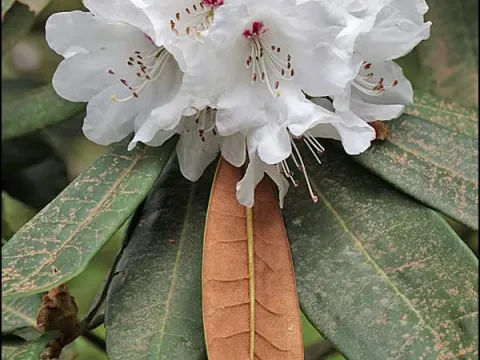
Milk rhododendron
Rhododendron galactinum
Milk rhododendron (Rhododendron galactinum) is a prominent member of the Ericaceae family. It is an evergreen shrub or small tree, notable for its large, leathery leaves and impressive growth habit, often reaching significant dimensions in its native habitat.
What the section contains
Milk rhododendron
The species originates from the mountainous regions of Sichuan, China. It naturally thrives in high-altitude forest ecosystems, preferring cool, shaded slopes where humidity remains consistently high throughout the year.
Successful cultivation requires acidic, well-draining soil rich in organic matter. Gardeners must ensure that the planting site provides excellent drainage, as the roots are highly susceptible to rot if subjected to waterlogged conditions.
The plant demands a sheltered environment protected from direct scorching sun and strong, drying winds. It performs best in partial shade or in positions where it receives filtered light, mimicking the forest canopy of its native environment.
Maintenance of soil moisture is vital for this species. Applying a thick layer of mulch around the root zone helps retain humidity and maintains a consistent soil temperature, protecting the shallow root system from extreme fluctuations.
The primary threats to Rhododendron galactinum include various fungal pathogens such as Phytophthora, which can cause severe root rot under conditions of poor soil aeration and excessive moisture.
Pests such as rhododendron bugs and spider mites are frequent adversaries. These insects feed on leaf tissue, leading to discoloration and a decline in the plant's overall health and aesthetic appeal.
Powdery mildew and leaf spot diseases can occur during seasons with high humidity and poor air circulation. Proper spacing during planting and pruning of overgrown branches are essential for maintaining plant vitality.
Iron chlorosis is a common physiological issue occurring when the soil pH rises above the optimal range for Ericaceous plants. Correcting soil acidity is necessary to ensure proper nutrient absorption.
Regular monitoring of foliage for signs of stippling or webbing is recommended. Early intervention with appropriate horticultural oils or systemic fungicides can prevent small outbreaks from becoming major infestations.