
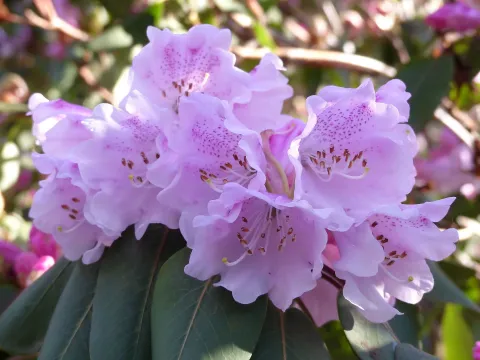
Mountain rhododendron
Rhododendron oreodoxa
Mountain rhododendron (Rhododendron oreodoxa) is a hardy shrub belonging to the Ericaceae family, native to the mountainous forests of China. It typically grows at high elevations, requiring specific microclimatic conditions.
What the section contains
Mountain rhododendron
This crop thrives in acidic soil with a pH range of 4.5 to 5.5. The substrate must be porous and well-drained, as the root system is highly sensitive to waterlogging, which often leads to rapid decay.
Placement is crucial: the plants prefer partial shade and protection from harsh afternoon sunlight. Consistent soil moisture and high atmospheric humidity are essential for maintaining the health of the foliage.
Propagation is usually achieved through seeds or stem cuttings. Seedlings require a stable environment with consistent humidity and protection from extreme temperature fluctuations to ensure successful establishment.
In landscaping, this species is prized for its aesthetic appeal in woodland gardens and rockeries. Its early spring flowering cycle makes it a sought-after specimen for temperate zone horticultural projects.
The primary threats include fungal pathogens such as Phytophthora root rot, which can devastate a stand if the drainage is inadequate or if the plant is stressed by prolonged heat.
Pests like lace bugs (Stephanitis rhododendri) and spider mites are frequent adversaries. These pests damage the leaves by extracting sap, resulting in chlorosis and reduced photosynthesis.
Integrated pest management strategies involve the use of dormant sprays and regular inspections to identify infestations early. Cleanliness in the garden environment helps reduce the inoculum level of pathogens.
Soil management is a key part of disease prevention. Incorporating organic mulch like pine bark helps maintain soil acidity and protects the shallow root system from extreme temperature variations.
Should symptoms of infection appear, immediate application of appropriate fungicides or insecticides is necessary. Furthermore, ensuring adequate air circulation around the canopy will help mitigate most fungal risks.