
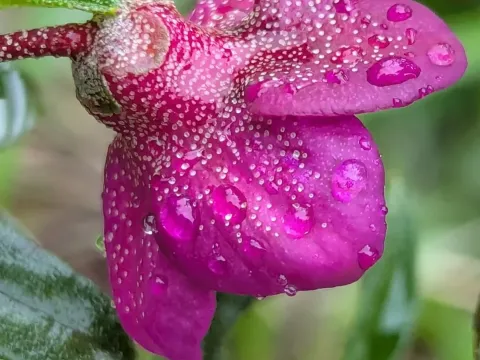
Scaly-leaved rhododendron
Rhododendron lepidotum
Scaly-leaved rhododendron (Rhododendron lepidotum) is an alpine shrub belonging to the Ericaceae family. It is distinguished by its small stature and the presence of characteristic scales on the underside of its leaves, which are typical for this specific species.
What the section contains
Scaly-leaved rhododendron
The native habitat of this plant includes the high-altitude regions of the Himalayas, spanning parts of India, Nepal, and China. It has evolved to thrive in cool, moist mountain conditions at elevations reaching up to 4500 meters.
For successful cultivation, the plant requires acidic, well-draining soil rich in organic matter. A pH level between 4.5 and 5.5 is necessary to ensure the plant can efficiently absorb essential nutrients from the substrate.
Placement in the garden should ideally provide partial shade. The species is sensitive to direct, intense sunlight and drying winds, which can easily scorch the foliage and reduce the overall aesthetic value of the shrub.
Cultural practices include consistent watering with soft, lime-free water and regular mulching. Using materials like pine needles or peat helps maintain the soil acidity and keeps the root zone cool, which is critical for its survival in non-native climates.
The most common health issues for this rhododendron species include root rot and powdery mildew, often resulting from poorly drained or waterlogged soils. Ensuring good drainage is the primary defense against these fungal pathogens.
Phytophthora root rot is particularly dangerous, as it can cause rapid decline. Proactive measures include avoiding overhead irrigation during humid weather and applying systemic fungicides if infection is detected.
Pests such as spider mites and rhododendron bugs can significantly impact the plant's health. These insects feed on the leaves, causing chlorosis, stippling, and eventual leaf drop if the infestation remains untreated.
Control strategies involve monitoring the undersides of leaves and applying appropriate insecticides when necessary. Maintaining plant vigor through proper fertilization helps the shrub resist such pest attacks more effectively.
Environmental stress, such as sudden temperature drops or lack of humidity, can also make the plant susceptible to opportunistic diseases. Providing a stable environment with consistent care significantly improves the plant's long-term resilience.