
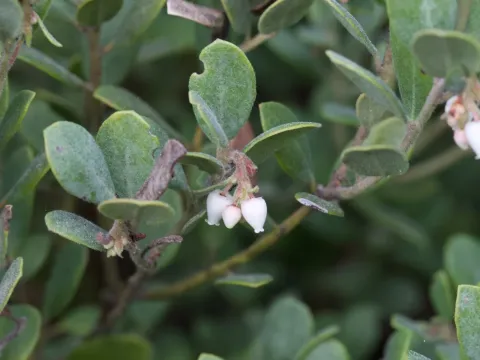
Sandmat manzanita
Arctostaphylos pumila
Sandmat manzanita (Arctostaphylos pumila) is a perennial shrub belonging to the Ericaceae family. It is a rare, low-growing evergreen plant native to the coastal sand dunes of California. Its distinct growth habit makes it a specialized ground cover plant, prized for its ability to form dense, mat-like colonies in challenging environments.
What the section contains
Sandmat manzanita
The cultural requirements for this plant are centered on soil drainage. It thrives in loose, sandy substrates that offer almost immediate water runoff. Heavy soils or those with high moisture retention are detrimental, as they inhibit root respiration and invite soil-borne pathogens. Providing a sterile, well-draining medium is essential for successful establishment.
Climatically, the sandmat manzanita requires a Mediterranean-type environment with cool, moist winters and dry, sunny summers. It is intolerant of high atmospheric humidity and prolonged dampness, which can cause foliage dieback. Full sun exposure is non-negotiable for maintaining the structural integrity and compactness of the plant's growth.
Agrotechnical management involves minimal intervention. This species is adapted to nutrient-poor soils; therefore, fertilization is generally unnecessary and potentially harmful, as it can cause succulent, weak growth. Pruning should be restricted to the removal of dead or damaged wood to maintain plant vigor and prevent the buildup of pathogens.
The primary utility of the sandmat manzanita lies in sustainable landscaping and slope stabilization. Due to its prostrate nature, it provides excellent erosion control and creates a durable evergreen landscape element. Its role in ecological restoration efforts is significant, particularly in regions where endemic sand dune flora requires preservation and habitat protection.
The most significant disease threats to Arctostaphylos pumila are fungal pathogens, specifically Phytophthora species, which target the root system in poorly drained sites. Symptoms often manifest as sudden wilting and discoloration. Proper site selection and water management are the primary defenses against these infections.
Pest pressures are generally manageable but include sap-sucking insects that can congregate on new growth. Aphids and leaf-feeding larvae may occasionally cause localized stress. Maintaining plant health through proper light and moisture control remains the most effective strategy to mitigate the impact of common pests and ensure long-term vitality.