
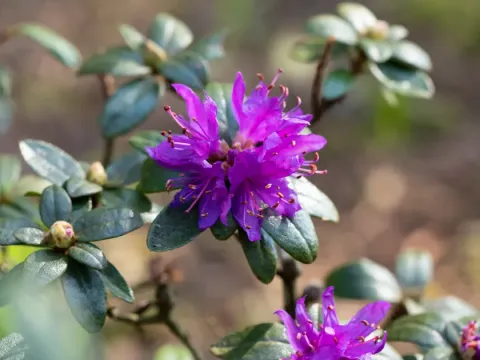
Rusty-leaved rhododendron
Rhododendron russatum
The Rusty-leaved rhododendron (Rhododendron russatum) is an evergreen dwarf shrub belonging to the Ericaceae family. It is recognized for its dense habit and vibrant flowers, making it a highly valued ornamental crop.
What the section contains
Rusty-leaved rhododendron
Native to the high-altitude regions of Yunnan, China, this species thrives in cool, moist, and mountainous environments. Its biological adaptation to these conditions necessitates specific garden management practices.
The plant strictly requires acidic soil conditions with a pH level between 4.5 and 5.5. The growing medium must be well-drained, porous, and rich in organic matter to support the sensitive, fibrous root system.
Optimal site selection involves choosing areas with partial shade and protection from harsh winds. Mulching with pine needles or acidic peat is essential to retain soil moisture and stabilize the root zone temperature.
Agricultural management includes consistent irrigation with soft, non-alkaline water. Fertilization should be strictly limited to specialized ericaceous feeds to avoid damaging the nutrient uptake mechanism of the plant.
Phytophthora root rot remains the most significant threat to Rhododendron russatum. This disease is typically associated with poor soil drainage and waterlogged conditions during periods of high humidity.
Insect pests, such as the rhododendron bug and spider mites, are common occurrences. They cause foliage discoloration and loss of vigor, often appearing during hot and dry summer spells.
Integrated pest management involves regular monitoring and the application of systemic insecticides or miticides when pest populations exceed the economic threshold for plant health.
During winter months, the primary threat is desiccation caused by cold, drying winds. Protective barriers are recommended to shelter young plants from direct sun and wind exposure in early spring.
Nutritional deficiencies, specifically iron chlorosis, are common when the soil pH rises above the optimal range. Regular soil testing and acidification are necessary to maintain healthy leaf pigmentation and growth.