
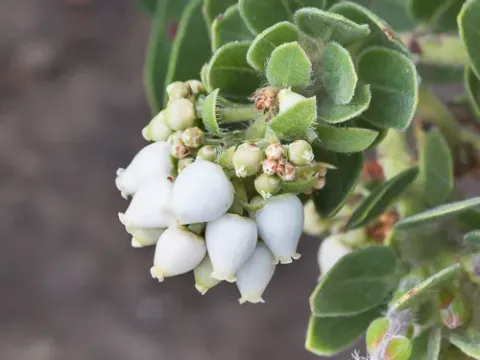
Shining manzanita
Arctostaphylos viridissima
The shining manzanita (Arctostaphylos viridissima) is a distinctive member of the Ericaceae family. It is an evergreen shrub native to specific coastal habitats, renowned for its bright, lustrous foliage.
What the section contains
Shining manzanita
This species thrives in well-draining, acidic, and nutrient-poor soils. It is particularly well-adapted to rocky or sandy terrain, where drainage is naturally efficient and the risk of waterlogging is minimized.
Climatically, it prefers regions with mild, wet winters and dry summers. It is moderately drought-tolerant once established, making it a suitable choice for water-wise landscaping in Mediterranean-style climates.
For optimal health, the plant requires full sun exposure to maintain its dense foliage and distinct color. Adequate air circulation is crucial to prevent fungal issues and ensure the overall vigor of the plant.
Cultural management should focus on non-disturbance of the root system. Fertilizers should be avoided, as the species has evolved to grow in poor soils and excessive nutrition can negatively impact its long-term survival.
Phytophthora root rot is the most serious threat, usually triggered by stagnant moisture in the root zone. Ensuring a sloped planting site or improved soil drainage is the best preventative measure.
Leaf spot diseases caused by various fungi can occur in humid climates, especially if the canopy is too dense or crowded by other plantings.
Pests such as scale insects and aphids may infest the new growth. Monitoring during the spring season is essential for early detection and manual removal.
Sunscald can damage the bark if the plant is suddenly exposed to harsh, direct sunlight after having been kept in deep shade for a long period.
The use of pesticides should be restricted, as manzanita species are generally sensitive to chemicals, which can cause significant phytotoxicity to their foliage.