
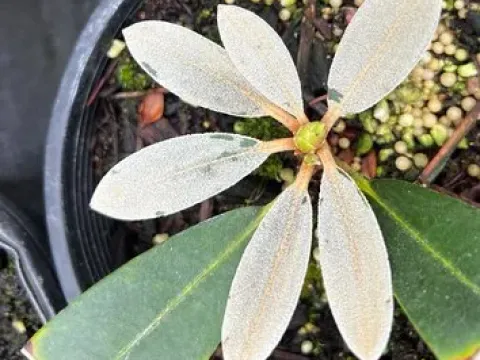
Rusty-leaved rhododendron
Rhododendron rubiginosum
The rusty-leaved rhododendron (Rhododendron rubiginosum) is an evergreen ornamental shrub belonging to the Ericaceae family, widely appreciated for its upright growth habit and beautiful inflorescences.
What the section contains
Rusty-leaved rhododendron
Propagation is generally performed through cuttings or by sourcing nursery-grown specimens, as growing from seed is a lengthy and specialized process requiring climate-controlled conditions.
The optimal planting window is during early spring or early autumn, allowing the root system to establish itself before extreme summer heat or winter frost.
When planting, it is essential to ensure that the root ball is placed at the correct depth, avoiding excessive burial which can cause the bark to rot at the root collar.
Once established, the shrub requires minimal intervention, though periodic shaping and removal of dead wood help maintain the desired decorative appearance.
This species strictly requires acidic soil conditions with a pH level between 4.5 and 5.5, which is necessary to facilitate nutrient uptake and ensure plant vitality.
The substrate must be light, permeable, and rich in organic matter; a mix of peat, pine bark, and sand provides the ideal environment for the shallow root system.
The plants thrive in temperate, humid climates and benefit from partial shade, which protects their foliage from bleaching and scorching during peak sunlight hours.
Moisture retention is key, so applying a layer of organic mulch like pine needles or wood chips is highly recommended to regulate soil temperature and humidity.
Regular but moderate watering is required during dry spells, ensuring the soil remains moist but not waterlogged to prevent root oxygen deprivation.
The most common pests include rhododendron bugs and spider mites, which can cause significant foliar damage and weaken the shrub's overall structure if left unmanaged.
Fungal infections such as powdery mildew or leaf spot diseases often occur in poorly ventilated areas where moisture levels remain high for extended periods.
Phytophthora root rot remains a serious threat to the longevity of the plant, often resulting from poor soil drainage or excessive water retention in the root zone.
Integrated pest management, involving systematic insecticide application and sanitation of affected parts, is the most effective way to control infestations.
Proactive care involves inspecting the underside of leaves for early signs of pest activity and maintaining proper spacing to ensure adequate air circulation.