
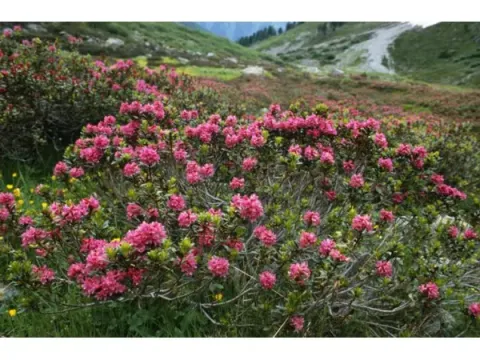
Rusty-leaved rhododendron
Rhododendron ferrugineum
The rusty-leaved rhododendron (Rhododendron ferrugineum) belongs to the Ericaceae family and is native to the Alps and Pyrenees. This evergreen shrub is highly valued for its dense foliage, characterized by small, rusty-colored scales on the underside of the leaves.
What the section contains
Rusty-leaved rhododendron
Optimal growth requires specific environmental conditions. It demands acidic, well-draining soil rich in organic matter. Gardeners must ensure the pH level stays within the acidic range, as the plant cannot tolerate limestone or alkaline substrates.
Climatic requirements involve cool, humid summers and consistent moisture. In garden settings, it is best placed in partial shade, sheltered from the scorching midday sun which can desiccate its shallow root system.
Cultural practices include consistent mulching with pine needles or leaf compost to retain moisture and maintain the necessary soil acidity. Annual feeding with specialized acid-loving plant fertilizers is recommended during the early growth phase.
Its primary agricultural and horticultural use is as an ornamental plant. Due to its slow-growing nature and cold hardiness, it is a staple in rock gardens, moorland-style landscaping, and alpine garden displays.
The most significant threats to the species are soil-borne pathogens, particularly Phytophthora root rot. These diseases thrive in waterlogged, poorly aerated soil conditions, making proper drainage the primary line of defense.
Common pests include the rhododendron bug, which causes stippling on leaves, and spider mites. Regular inspections and the application of appropriate acaricides or systemic insecticides are necessary to manage infestations effectively.