
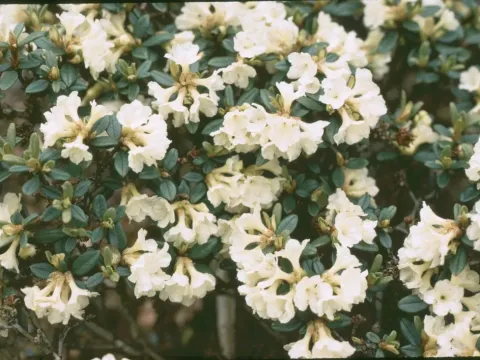
Sargent's rhododendron
Rhododendron sargentianum
Sargent's rhododendron (Rhododendron sargentianum) is a distinct species of dwarf evergreen shrub within the Ericaceae family. Native to the high-altitude rocky slopes and alpine meadows of western Sichuan, China, this plant has adapted to harsh mountainous environments characterized by high humidity and cool temperatures.
What the section contains
Sargent's rhododendron
Botanically, it is recognized for its diminutive size, usually staying below 60 cm in height. The foliage consists of small, aromatic, scale-covered leaves that remain green throughout the year. The flowers are typically arranged in compact trusses and exhibit soft cream or yellow hues, adding a subtle elegance to its rugged appearance.
To cultivate this species successfully, one must replicate its natural habitat conditions. This involves providing highly acidic, peaty, and porous soil that facilitates rapid drainage. The plant is sensitive to alkalinity; therefore, water quality should be strictly monitored to avoid raising the soil pH.
Light management is crucial, as Sargent's rhododendron thrives in partial shade or dappled sunlight. In its natural range, it benefits from the cool, misty mountain air, so in garden settings, planting it in a sheltered spot protected from intense afternoon sun and desiccating winds is essential for survival.
In terms of agricultural and horticultural utility, it is highly prized by collectors for rock gardens and small container arrangements. Its slow growth rate and ability to withstand cold temperatures make it a durable choice for landscaping projects aimed at recreating natural alpine or woodland scenes.
Phytophthora root rot is the most serious threat to Sargent's rhododendron, usually triggered by poor soil drainage. If the root zone remains waterlogged, the pathogen rapidly destroys the fine root system, leading to wilting and eventual plant death. Proper drainage material and raised beds are key preventative measures.
Pests such as rhododendron bugs, spider mites, and weevils pose significant risks. These insects often feed on the sap or tissue of the foliage, leading to mottling, chlorosis, and general decline. Integrated pest management, including systemic insecticides and horticultural oils, should be applied upon the first signs of infestation.
Leaf spot diseases, caused by various fungal pathogens, may emerge during particularly wet seasons. Keeping the environment clean by removing fallen debris and ensuring good air circulation around the shrub significantly reduces the likelihood of infection and the need for chemical intervention.
Iron deficiency, or chlorosis, is a common physiological challenge, often resulting from a lack of iron availability in less acidic soils. Supplementing the soil with chelated iron and using fertilizers specifically formulated for acid-loving plants will help maintain the deep green color of the foliage.
Winter desiccation is a critical threat to evergreen shrubs, especially when the ground is frozen. Providing adequate hydration in late autumn and using breathable winter covers can prevent the plant from losing too much moisture through its leaves, ensuring a healthy start when spring arrives.