
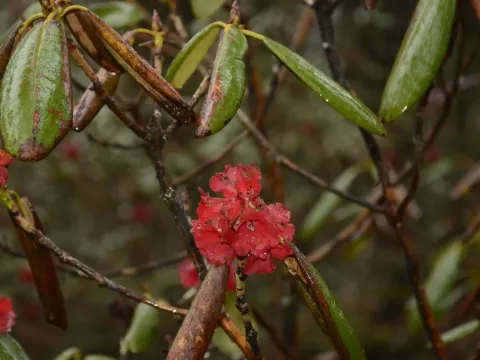
Shining rhododendron
Rhododendron fulgens
Shining rhododendron (Rhododendron fulgens) is a prominent member of the Ericaceae family, naturally occurring in the high-altitude Himalayan ranges. This evergreen shrub is highly valued by horticulturists for its vibrant flowers and significant cold hardiness, making it a desirable species for specific garden landscapes.
What the section contains
Shining rhododendron
The culture demands acidic, well-draining soil with a high organic content. Achieving the correct soil chemistry, typically between 4.5 and 5.5 pH, is critical for nutrient uptake. Gardeners should incorporate substantial amounts of peat moss or pine bark to maintain the required acidity levels.
Shining rhododendron thrives in dappled shade conditions, mimicking its natural habitat beneath the canopy of alpine forests. Direct exposure to intense afternoon sunlight can lead to leaf scorching, while wind protection is essential to prevent excessive transpiration in winter.
Watering management is a cornerstone of success for this species. The root system is shallow and sensitive to both drought and waterlogging. Regular irrigation with soft, lime-free water is recommended, coupled with an organic mulch layer to maintain consistent soil moisture.
Fertilization must be approached with caution, utilizing only acid-loving plant formulas. Application should be limited to the early spring to ensure that new growth hardens off before the onset of winter temperatures, preventing frost damage to succulent tissue.
Phytophthora root rot is the most serious threat to Rhododendron fulgens, primarily caused by poor soil drainage and excessive soil moisture. Preventive measures include planting on raised beds and strictly avoiding any stagnant water conditions in the root zone.
Powdery mildew often appears during periods of high humidity and poor ventilation. Pruning dense branches to improve air circulation within the shrub canopy is an effective cultural control method alongside targeted fungicidal applications when necessary.
Rhododendron bugs and spider mites are frequent pests that cause discoloration and premature leaf drop. Early identification through regular scouting of the undersides of leaves is essential for timely intervention with appropriate horticultural oils or acaricides.
Nematodes and vine weevil larvae can cause significant damage to the root system, often going unnoticed until the shrub shows signs of decline. Biological control agents or targeted soil insecticides are recommended if infestation levels are high.
Leaf chlorosis is frequently observed when the soil pH rises, making iron unavailable to the plant. Addressing this requires immediate soil acidification and the application of chelated iron to restore the plant's health and vibrant foliage color.