
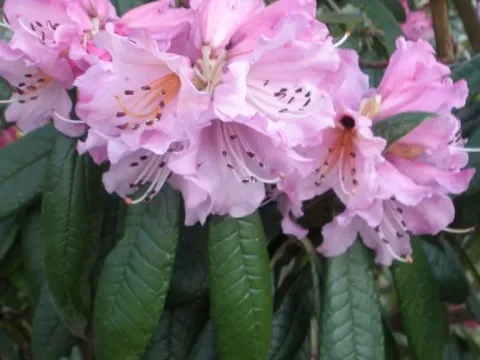
Many-flowered rhododendron
Rhododendron floribundum
The Many-flowered rhododendron (Rhododendron floribundum) is a prominent evergreen shrub belonging to the Ericaceae family. It is native to the high-altitude forests of Sichuan, China, where it thrives in cool, humid environments.
What the section contains
Many-flowered rhododendron
This species requires specific soil conditions to flourish, primarily acidic substrate with a pH ranging from 4.5 to 5.5. The soil must be loose, aerated, and rich in organic matter to prevent root suffocation.
Regarding climate, the plant prefers sites with partial shade, as intense sunlight can cause leaf scorching. It also benefits from a location protected against harsh winter winds which can lead to moisture loss in the foliage.
Cultural practices involve the consistent application of mulch, such as pine needles or wood chips, around the base of the shrub. This layer effectively regulates soil temperature and helps maintain the necessary moisture levels.
Water management is critical for this rhododendron. It is sensitive to alkaline water and excessive minerals, so rainwater is the preferred irrigation source. Irrigation should be deep but infrequent to encourage a healthy root structure.
Phytophthora root rot is a major threat to this species, usually triggered by waterlogged conditions. Ensuring excellent soil drainage at the time of planting is the most effective preventative measure for long-term health.
Pests such as rhododendron lace bugs often infest the undersides of leaves, causing yellowing and weakening the shrub. Monitoring during the spring months and using targeted horticultural soaps or insecticides is recommended.