
Manzanita
Arctostaphylos manzanita
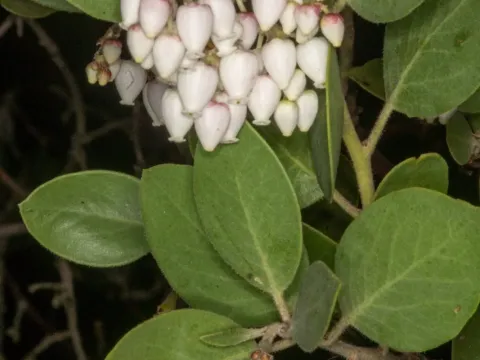
Arctostaphylos manzanita, commonly known as Manzanita, is a prominent member of the Ericaceae family. It is an evergreen shrub or small tree native to the diverse landscapes of California, often found in chaparral and woodland biomes.
What the section contains
Manzanita
The plant is highly recognizable due to its smooth, dark red or chocolate-colored bark that peels off in thin, papery strips. Its thick, gray-green leaves are specialized to minimize transpiration, allowing the plant to thrive in arid and semi-arid environments.
To cultivate Manzanita successfully, one must provide a location with full sun and excellent drainage. The soil should be slightly acidic and gritty or sandy, as the roots are highly susceptible to root rot if they remain in water-logged conditions for extended periods.
In terms of agricultural and horticultural maintenance, this species requires very little irrigation once established. Its deep taproot system allows it to reach water reserves that many other ornamental plants cannot access, making it a staple in xeriscaping.
The wood of the Manzanita is extremely hard and dense, which makes it highly prized for decorative use, such as in aquascaping and custom furniture crafting. Additionally, its early spring flowers provide a critical nectar source for native pollinators and honeybees.
The most significant threat to Manzanita is the pathogen Phytophthora, which causes root rot in wet soil conditions. To mitigate this, growers should strictly avoid supplemental irrigation during the summer months when the plant enters a period of dormancy.
Scale insects and aphids can occasionally infest the stems, particularly in young or stressed plants. Monitoring the undersides of the leaves and the nodes of the branches is essential for the early detection and management of these sap-sucking pests.
Fungal leaf spots can occur if the foliage is kept excessively moist. Ensuring proper spacing between plants is a vital cultural practice to promote adequate air circulation and prevent the development of foliar pathogens.
While the plant is highly resistant to many diseases, improper pruning techniques can open wounds that become entry points for wood-boring insects. Pruning should always be performed with sanitized tools during the dry season to minimize disease risk.
Weed management is critical during the first two years of growth. Removing surrounding invasive grasses reduces competition for nutrients and ensures the Manzanita receives adequate light and resources to establish its structural integrity.