
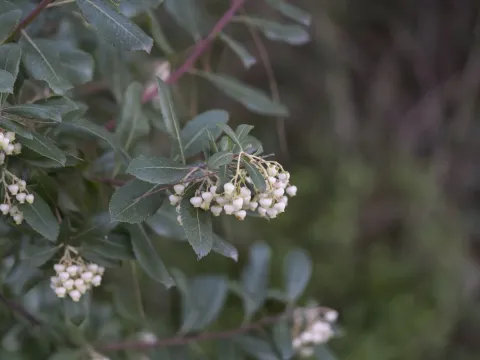
Oriental strawberry tree
Arbutus andrachnoides
The Oriental strawberry tree (Arbutus andrachnoides) is a distinctive evergreen species belonging to the Ericaceae family. As a natural hybrid, it possesses a unique combination of hardiness and ornamental appeal that makes it highly prized by horticulturists.
What the section contains
Oriental strawberry tree
Originating from the Eastern Mediterranean region, including Greece and Turkey, this plant thrives in warm, temperate climates. It is best adapted to regions with mild winters, as severe frosts can damage its delicate evergreen foliage and younger branches.
The species requires well-drained, slightly acidic to neutral soils and performs exceptionally well in rocky or calcareous environments. It exhibits significant drought tolerance once established, making it a sustainable choice for water-conscious landscape design.
Botanically, Arbutus andrachnoides is famous for its striking reddish-brown bark that exfoliates in thin, smooth sheets to reveal a vibrant layer beneath. Its dark green, leathery leaves provide a lush background throughout the changing seasons.
In modern agricultural and landscaping contexts, this tree is used primarily for its aesthetic value. It serves as an excellent specimen plant or a decorative feature in Mediterranean-style gardens, where its unique architecture adds year-round structural interest.
While not primarily cultivated for mass fruit production, the Oriental strawberry tree does yield small, spherical fruits that resemble strawberries. These fruits are edible but have a mealy texture and a subtle, sweet-tart flavor profile.
Yield capacity is largely dependent on environmental factors, particularly the amount of heat and sunlight the tree receives throughout the growing season. Warm summers are crucial for proper fruit development and flavor concentration.
Harvesting these fruits requires patience, as they ripen slowly. In many cases, the fruits are left on the tree to enhance its ornamental appeal, as the contrast between the green leaves, brown bark, and vibrant fruits creates a spectacular visual effect.
When harvested, the fruit can be processed into small batches of artisanal preserves, jams, or fermented into specialized liqueurs. These products are often niche items and reflect the unique botanical diversity of the region.
Management of the tree for fruit production involves minimal intervention, focusing mainly on structural pruning to maintain air circulation. Proper maintenance ensures that the tree allocates enough energy for both growth and fruit maturation.
The Oriental strawberry tree is generally robust, but it can be susceptible to specific fungal issues if drainage is poor. Root rot is a primary concern in waterlogged soils, which is why choosing a suitable site is essential for long-term health.
Leaf spot diseases may occur during periods of high humidity and poor airflow. Managing the density of the canopy and ensuring the plant receives adequate sunlight helps in mitigating these fungal risks effectively.
Pests such as scale insects can occasionally infest the stems and leaves, causing a decline in plant vigor. Monitoring the tree during the early spring and employing integrated pest management techniques can prevent significant infestations.
Nutrient deficiencies, specifically iron or manganese chlorosis, can occur if the soil pH is not well-managed. Regular monitoring of soil chemical properties is a necessary agricultural practice to maintain the foliage's rich, deep green appearance.
Finally, protection from extreme environmental stress, such as severe winter winds or prolonged drought in young specimens, is vital. Consistent care practices significantly improve the tree's natural resistance to common pathogens and pests.