
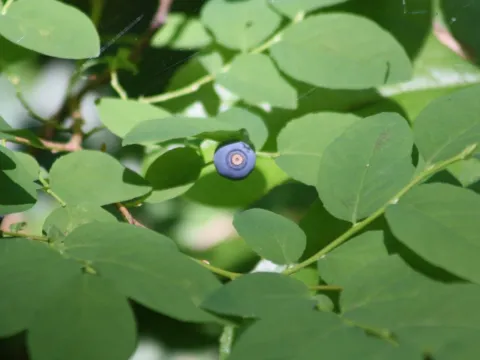
Oval-leaf blueberry
Vaccinium ovalifolium
The oval-leaf blueberry Vaccinium ovalifolium is a member of the Ericaceae family. It is a deciduous shrub native to the coastal regions of the Pacific Northwest and parts of East Asia, thriving in cool, temperate forest environments.
What the section contains
Oval-leaf blueberry
Cultivation requires specific environmental conditions, primarily an acidic soil environment with a pH between 4.0 and 5.5. The substrate must be well-drained, porous, and rich in organic matter to mimic its natural woodland habitat.
The plant is highly climate-sensitive, preferring high humidity and moderate temperatures throughout the growing season. It performs poorly in regions with severe summer heat or prolonged drought, requiring consistent moisture to maintain vitality.
Botanically, it reaches a height of 1 to 2 meters, characterized by ovate leaves and small, bell-shaped flowers. The shrub relies on native pollinators to ensure successful fertilization and subsequent fruit set.
Agricultural use focuses on the production of nutrient-dense berries. The fruit is highly valued for its health-promoting properties, including high levels of antioxidants, making it a sought-after product for the fresh market and food processing industries.
The yield potential of Vaccinium ovalifolium is largely determined by site selection and pollination success. Under managed agricultural conditions, high yields are achieved by maintaining optimal moisture and managing light exposure.
Common threats to the crop include fungal pathogens like leaf spot and various root rots, often exacerbated by stagnant water or poor air circulation within the shrub canopy. Preventive measures include proper spacing and organic mulching.
Pests such as leafrollers and specific aphid species can cause damage to foliage. Integrated pest management strategies, emphasizing biological control and minimizing chemical inputs, are recommended for sustainable production.
Harvesting should be performed when berries are fully mature and reach their characteristic deep blue hue. Careful handling is necessary to maintain the fruit's structural integrity, as the berries are delicate and have a limited shelf life.