
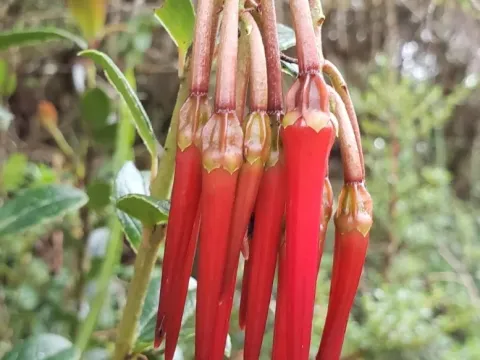
Ceratostema
Ceratostema
Ceratostema is a fascinating genus of shrubs belonging to the Ericaceae family, native to the high-altitude cloud forests of the Andes. These plants are often found growing as epiphytes, meaning they thrive in conditions with high moisture and excellent drainage.
What the section contains

Ceratostema
Successful cultivation requires a cool climate with high relative humidity, generally ranging between 70% and 85%. Given their adaptation to mountainous environments, they do not tolerate intense heat or direct scorching sunlight, making greenhouse conditions ideal.
The planting medium must be strictly acidic, mimicking the natural humus-rich soils of their habitat. A mix of peat moss, pine bark, and perlite provides the necessary aeration and moisture-holding capacity while maintaining a pH balance conducive to root health.
Watering frequency should be determined by the moisture levels of the substrate; while the roots require consistent hydration, waterlogging must be avoided at all costs. Soft water, such as rainwater, is highly recommended to prevent the accumulation of salts in the growing medium.
In terms of agricultural value, Ceratostema is gaining attention as an exotic fruit-producing crop. Its berries are noted for their nutritional value and distinct flavor profile, which makes them a potential candidate for niche market development in specialty horticultural sectors.
Root rot is the most significant threat to Ceratostema, usually caused by poor drainage or overwatering in low-light conditions. Utilizing preventive fungicides and ensuring effective substrate aeration is vital for the long-term survival of the crop.
Pests such as spider mites and mealybugs can cause severe damage in controlled environments if the humidity drops too low. Regular monitoring and the application of biological control agents are effective strategies for managing these common greenhouse invaders.
Nutrient deficiencies, particularly iron chlorosis, are common when the pH of the growing medium rises above the optimal range of 4.5 to 5.5. Chelated iron fertilizers are often necessary to restore leaf color and improve the overall metabolic rate of the shrub.
Poor air circulation increases susceptibility to fungal foliage diseases, including powdery mildew. Implementing fans within the growing area helps to reduce humidity levels on leaf surfaces and prevents the rapid spread of pathogens.
Physical damage to the root system during repotting is a major stress factor that can lead to stunted growth. It is essential to use a gentle repotting technique that preserves the delicate root structure and allows the plant to transition smoothly into a larger container.