
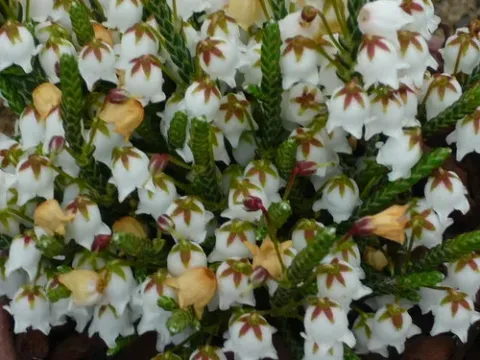
Cassiope wardii
Cassiope wardii
Cassiope wardii is a remarkable evergreen shrub belonging to the Ericaceae family, widely appreciated by alpine gardeners for its dense, moss-like foliage and beautiful bell-shaped white flowers. It is a slow-growing plant that demands specific environmental conditions to thrive.
What the section contains
Cassiope wardii
Native to the high-altitude regions of Tibet and the Himalayas, this species is perfectly adapted to cool and moist climates. It flourishes in environments that mimic high mountain habitats, characterized by clean, fresh air and consistent moisture levels.
The soil requirement is critical for the survival of this plant. It strictly demands acidic, peat-based, well-draining soil with a pH ranging from 4.5 to 5.5. Mixing sand or fine grit is essential to prevent water accumulation and ensure root aeration.
Regarding light, it prefers partial shade, particularly in regions with hot summers. Protection from the scorching midday sun is mandatory to prevent the leaves from drying out or the root zone from overheating, which can be fatal for the specimen.
Effective cultivation techniques include maintaining a cool root environment through mulching. Using stones or pine bark helps conserve moisture and prevents drastic soil temperature fluctuations, which the plant is highly sensitive to during the growing season.
Root rot is the most common threat to Cassiope wardii, often caused by poor drainage or overwatering. Once established in the roots, fungal decay spreads rapidly, making it difficult to save the plant; therefore, prevention through proper soil structure is paramount.
In humid conditions with poor ventilation, the plant is susceptible to grey mold (Botrytis). This fungus can quickly affect dense foliage, leading to browning and dieback of the delicate stems. Maintaining adequate airflow is the best preventative strategy.
Spider mites represent the primary pest challenge, especially in environments where air humidity is insufficient. These pests feed on the leaves, causing them to lose their vibrant green color and eventually drop, which detracts from the plant's aesthetic value.
Occasional infestations of scale insects may occur, requiring physical removal or targeted application of systemic insecticides. It is crucial to use treatments suitable for Ericaceous plants to avoid chemical damage to the foliage.
Overall, Cassiope wardii is a rewarding but demanding plant. Monitoring for early signs of disease and ensuring the growing site mimics its natural alpine home are the foundations of successful long-term cultivation and health management.